Oxalis pes-caprae

Nickender Sauerklee

Englische Bezeichnung: Bermuda buttercup, African wood-sorrel, sourgrass, and soursob
Spanische Bezeichnung: Vinagrillo

Familie  

Oxalis pes-caprae
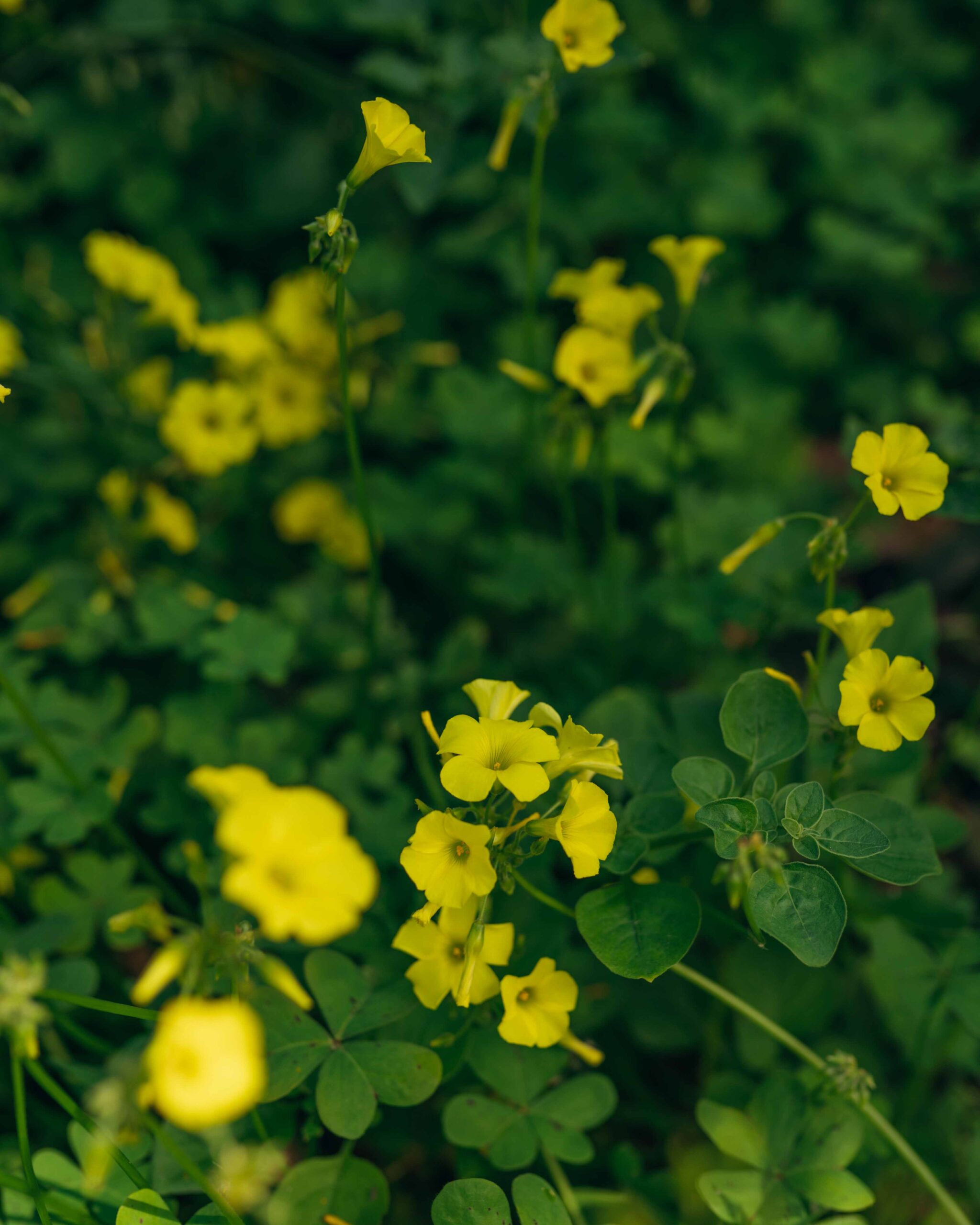
Der Nickende Sauerklee stammt ursprünglich aus Südafrika und gehört zur Familie der Sauerkleegewächse. Heute ist er rund um das Mittelmeer, auch auf den Kanarischen Inseln, weit verbreitet und fällt besonders im Winter und Frühjahr auf, wenn er große gelbe Blütenteppiche bildet.
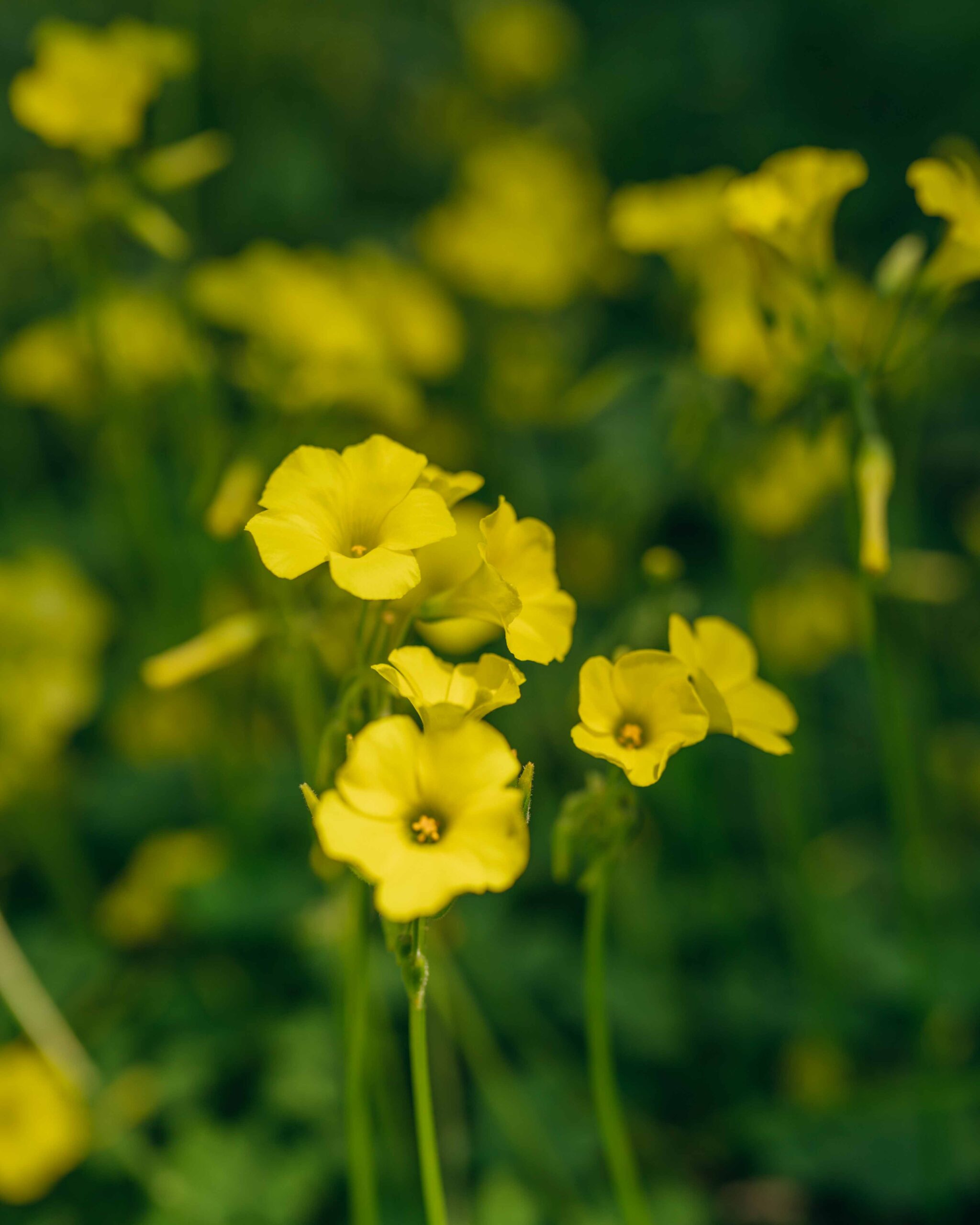
Seinen Namen verdankt er den leuchtend gelben, trichterförmigen Blüten, die oft leicht nach unten „nicken“. Die dreiteiligen Blätter erinnern an Klee und enthalten – wie typisch für Sauerklee – Oxalsäure, die den leicht säuerlichen Geschmack verursacht.
Obwohl er hübsch anzusehen ist, gilt er in vielen Regionen als invasive Pflanze, da er sich stark über Brutknollen im Boden vermehrt und andere Arten verdrängen kann. Für Menschen und Tiere ist er in größeren Mengen leicht giftig, als Zierpflanze oder Bodendecker jedoch beliebt.
Der Nickende Sauerklee bezaubert mit seinen sonnengelben Blüten im Winter, ist aber zugleich ein Paradebeispiel für die Kraft und Ausbreitungsgeschwindigkeit mancher Pflanzenarten.

Family

Oxalis pes-caprae
The nodding wood sorrel originates from South Africa and belongs to the wood sorrel family. Today, it is widespread around the Mediterranean, including the Canary Islands, and is particularly noticeable in winter and spring when it forms large yellow carpets of flowers.
It owes its name to its bright yellow, funnel-shaped flowers, which often ‘nod’ slightly downwards . The three-part leaves are reminiscent of clover and contain oxalic acid, which is typical of wood sorrel and causes its slightly sour taste.
Although it is pretty to look at, it is considered an invasive plant in many regions because it reproduces rapidly via tubers in the soil and can displace other species. It is slightly toxic to humans and animals in large quantities, but is popular as an ornamental plant or ground cover.
Wood sorrel charms with its sunny yellow flowers in winter, but at the same time is a prime example of the power and speed of spread of some plant species.

Familia

Oxalis pes-caprae
El oxalis nodosus es originario de Sudáfrica y pertenece a la familia de las oxalidáceas. Hoy en día está muy extendido por todo el Mediterráneo, también en las Islas Canarias, y destaca especialmente en invierno y primavera, cuando forma grandes alfombras de flores amarillas.
Debe su nombre a las flores de color amarillo brillante y forma de embudo, que a menudo «inclinan» ligeramente hacia abajo . Las hojas de tres partes recuerdan al trébol y contienen, como es típico en el oxalis, ácido oxálico, que le da su sabor ligeramente ácido.
Aunque es bonita a la vista, en muchas regiones se considera una planta invasora, ya que se reproduce rápidamente a través de tubérculos en el suelo y puede desplazar a otras especies. En grandes cantidades, es ligeramente tóxica para las personas y los animales, pero es muy apreciada como planta ornamental o cubierta vegetal.
La oxalis inclinada encanta con sus flores amarillas en invierno, pero al mismo tiempo es un ejemplo paradigmático del poder y la velocidad de propagación de algunas especies vegetales.