

Polygala myrtifolia

Myrten-Kreuzblume

Englische Bezeichnung: Myrtle-leaf Milkwort
Spanische Bezeichnung: Polygala Myrtifolia

Familie  

Kreuzblumengewächse
Die Myrten-Kreuzblume stammt ursprünglich aus Südafrika und gehört zur Familie der Kreuzblumengewächse (Polygalaceae). Ihren Namen verdankt sie den myrtenähnlichen, immergrünen Blättern und den auffällig geformten Blüten.
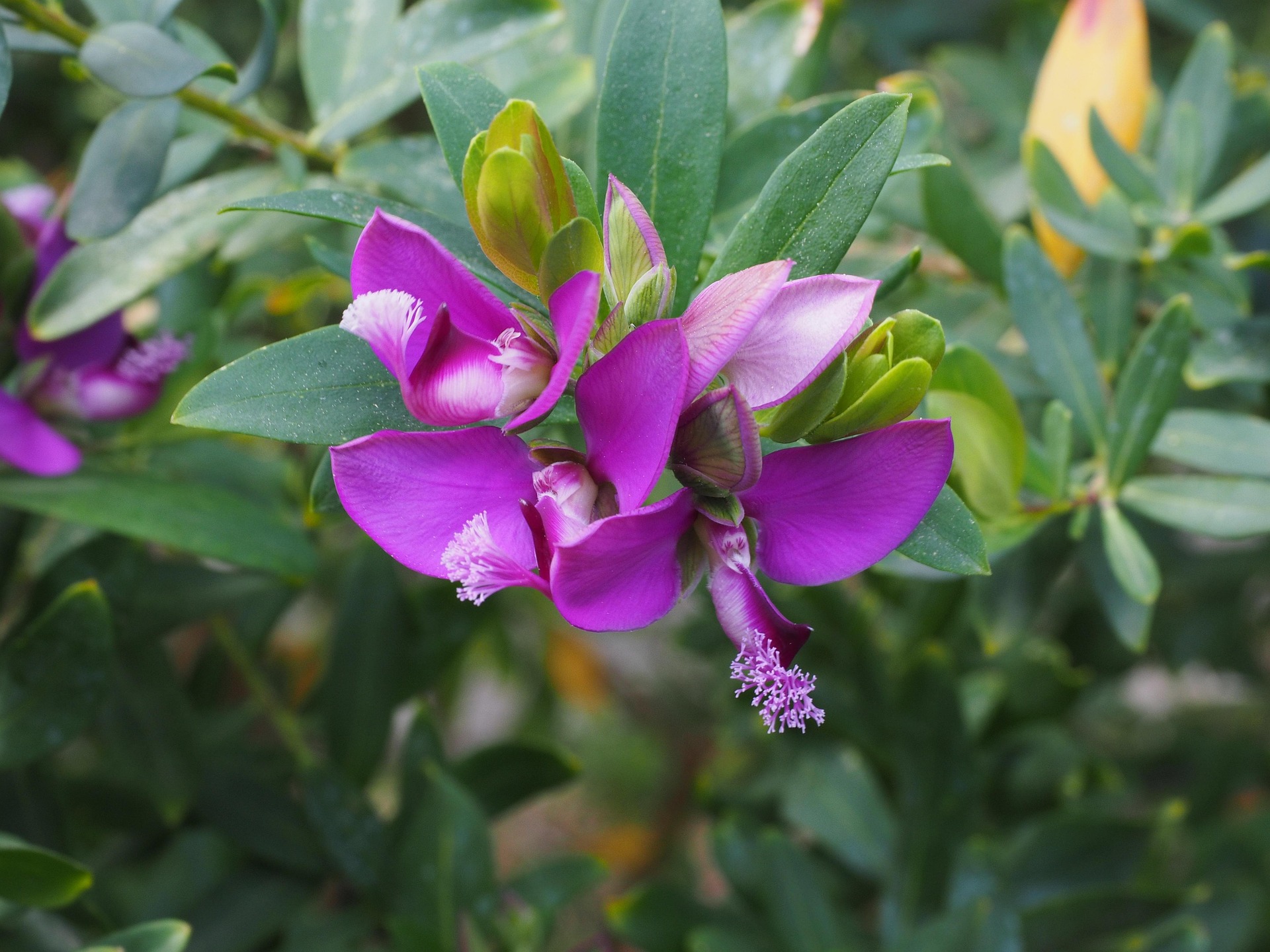
Besonders charakteristisch sind die violetten bis purpurfarbenen Blüten, die an kleine Schmetterlinge erinnern. Sie erscheinen fast das ganze Jahr über und machen die Pflanze zu einem beliebten Zierstrauch in Gärten und Parks milder Klimazonen. In ihrer Heimat Südafrika ist sie eine wichtige Nektarquelle für Insekten und Vögel.
Die Myrten-Kreuzblume wächst als Strauch bis zu 3 Meter hoch und verträgt sowohl Kübelhaltung als auch Auspflanzung in frostfreien Regionen. Sie liebt sonnige Standorte und ist pflegeleicht, solange sie genügend Licht und Wärme erhält.
Interessant ist auch ihre Symbolik: In manchen Kulturen steht sie für Lebenskraft und Erneuerung.
Die Myrten-Kreuzblume verbindet exotische Schönheit mit ökologischer Bedeutung – eine immergrüne Pflanze, die durch ihre fast ununterbrochene Blütezeit beeindruckt und Gäste wie Bestäuber gleichermaßen erfreut.

Family

Milkwort
The myrtle milkwort is native to South Africa and belongs to the milkwort family (Polygalaceae). It owes its name to its myrtle-like, evergreen leaves and strikingly shaped flowers.
Its purple to crimson flowers, which resemble small butterflies, are particularly characteristic. They appear almost all year round, making the plant a popular ornamental shrub in gardens and parks in mild climates. In its native South Africa, it is an important source of nectar for insects and birds.
The myrtle crossflower grows as a shrub up to 3 metres high and tolerates both container cultivation and planting out in frost-free regions. It loves sunny locations and is easy to care for as long as it receives sufficient light and warmth.
Its symbolism is also interesting: in some cultures, it represents vitality and renewal.
The myrtle crossflower combines exotic beauty with ecological significance – an evergreen plant that impresses with its almost uninterrupted flowering period and delights guests and pollinators alike.

Familia

Poligaláceas (Polygalaceae)
La flor de mirto es originaria de Sudáfrica y pertenece a la familia de las poligaláceas (Polygalaceae). Debe su nombre a sus hojas perennes, similares a las del mirto, y a sus flores de forma llamativa.
Son especialmente características las flores de color violeta a púrpura, que recuerdan a pequeñas mariposas. Aparecen durante casi todo el año y convierten a la planta en un arbusto ornamental muy popular en jardines y parques de climas templados. En su país natal, Sudáfrica, es una importante fuente de néctar para insectos y aves.
La flor de mirto crece como arbusto hasta 3 metros de altura y tolera tanto el cultivo en maceta como la plantación en regiones sin heladas. Le encantan los lugares soleados y es fácil de cuidar, siempre que reciba suficiente luz y calor.
También es interesante su simbolismo: en algunas culturas representa la vitalidad y la renovación.
La flor de mirto combina belleza exótica con importancia ecológica: es una planta de hoja perenne que impresiona por su floración casi ininterrumpida y que deleita tanto a los visitantes como a los polinizadores.