
Aleurites moluccana

LICHTNUSSBAUM

Englische Bezeichnung: Candlenut, Candleberry, Indian Walnut
Spanische Bezeichnung: Nuez de la India

Familie  

Wolfsmilchgewächse (Euphorbiaceae)
Die Aleurites moluccanus, auch Kukui-Nussbaum oder Lichtnussbaum genannt, gehört zur Familie der Wolfsmilchgewächse (Euphorbiaceae). Ursprünglich stammt er aus Malaysia, Indonesien und Neuguinea, wurde jedoch früh durch den Menschen verbreitet und ist heute besonders eng mit Hawaii verbunden, wo er als Staatsbaum gilt.
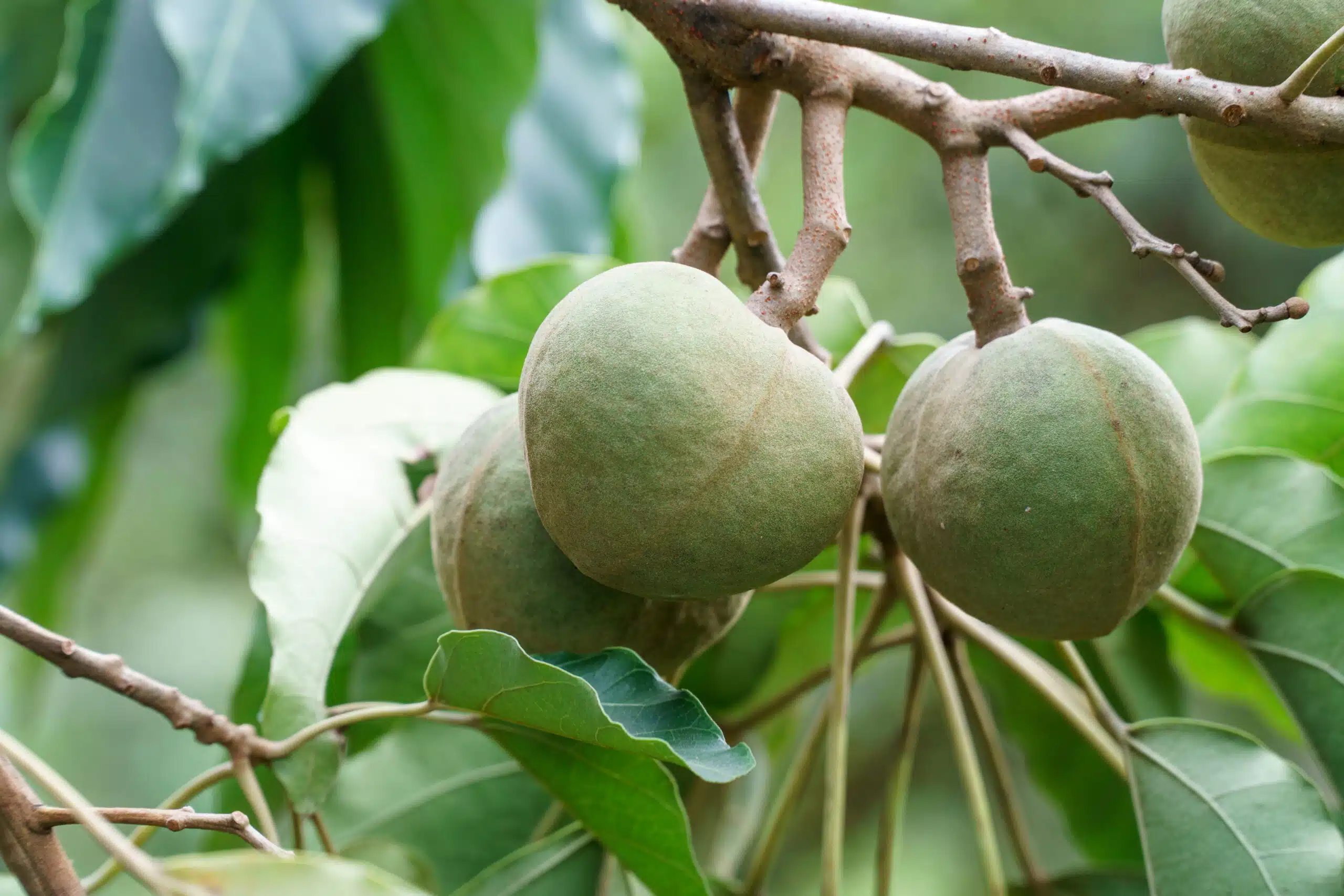
Der bis zu 25 Meter hohe Baum trägt große, silbrig schimmernde, gelappte Blätter und bildet runde, grünlich-graue Früchte. In ihrem Inneren befinden sich die harten, ölreichen Samen – die Kukui-Nüsse. Sie waren für die polynesische Kultur von enormer Bedeutung: Aus ihnen wurde Öl gewonnen, das traditionell für Lampenlicht, Salben, Seifen und Lacke genutzt wurde. Daher der Name „Lichtnuss“.
Spannend ist auch die symbolische Bedeutung: In Hawaii steht der Kukui-Baum für Erleuchtung, Schutz und Frieden; seine Blätter und Nüsse wurden in Leis (Blumen- und Blätterketten) verarbeitet. Medizinisch diente das Öl als Hautpflegemittel, während geröstete Nüsse vorsichtig in Speisen Verwendung fanden – roh sind sie jedoch giftig.
Heute wird Aleurites moluccanus weltweit in den Tropen kultiviert, sowohl als Zierbaum wegen seiner hellgrünen bis silbrigen Krone, als auch wirtschaftlich für Kukui-Öl, das in der Kosmetikindustrie geschätzt ist.

Family

Euphorbiaceae
Aleurites moluccanus, also known as the kukui nut tree or light nut tree, belongs to the spurge family (Euphorbiaceae). It originates from Malaysia, Indonesia and New Guinea, but was spread by humans early on and is now particularly closely associated with Hawaii, where it is considered the state tree.
The tree, which grows up to 25 metres tall, has large, silvery, lobed leaves and produces round, greenish-grey fruits. Inside are hard, oil-rich seeds – the kukui nuts. These were of enormous importance to Polynesian culture: oil was extracted from them, which was traditionally used for lamp light, ointments, soaps and varnishes. Hence the name ‘light nut’.
Its symbolic meaning is also fascinating: in Hawaii, the kukui tree stands for enlightenment, protection and peace; its leaves and nuts were used in leis (flower and leaf chains). Medically, the oil was used as a skin care product, while roasted nuts were carefully used in food – however, they are poisonous when raw.
Today, Aleurites moluccanus is cultivated worldwide in the tropics, both as an ornamental tree because of its light green to silvery crown, and economically for kukui oil, which is valued in the cosmetics industry.

Familia

Euphorbiaceae
El Aleurites moluccanus, también conocido como árbol de nueces kukui o árbol de nueces de luz, pertenece a la familia de las euforbiáceas (Euphorbiaceae). Es originario de Malasia, Indonesia y Nueva Guinea, pero fue difundido muy pronto por el ser humano y hoy en día está especialmente vinculado a Hawái, donde se considera el árbol nacional.
El árbol, que alcanza una altura de hasta 25 metros, tiene hojas grandes, lobuladas y de color plateado brillante, y produce frutos redondos de color verde grisáceo. En su interior se encuentran las semillas duras y ricas en aceite: las nueces de kukui. Estas nueces eran de gran importancia para la cultura polinesia, ya que de ellas se extraía aceite que se utilizaba tradicionalmente para lámparas, ungüentos, jabones y barnices. De ahí su nombre «nuez de la luz».
Su significado simbólico también es interesante: en Hawái, el árbol kukui representa la iluminación, la protección y la paz; sus hojas y nueces se utilizaban para elaborar leis (collares de flores y hojas). Desde el punto de vista médico, el aceite se utilizaba como producto para el cuidado de la piel, mientras que las nueces tostadas se utilizaban con precaución en la alimentación, ya que crudas son tóxicas.
Hoy en día, el Aleurites moluccanus se cultiva en todo el mundo en los trópicos, tanto como árbol ornamental por su copa de color verde claro a plateado, como con fines económicos por el aceite de kukui, muy apreciado en la industria cosmética.