

Erythrina crista-galli

KORALLENBAUM

Englische Bezeichnung: Cockspur Coral Tree
Spanische Bezeichnung: Árbol del coral, Bucaré, Ceibo

Familie  

Hülsenfrüchtler (Fabaceae)

Die Erythrina crista-galli, bekannt als Korallenbaum oder Cockspur Coral Tree, gehört zur Familie der Hülsenfrüchtler (Fabaceae). Sie stammt ursprünglich aus den subtropischen Regionen Südamerikas – vor allem aus Brasilien, Uruguay und Argentinien – und ist dort tief in der Kultur verwurzelt. In Argentinien gilt sie sogar als Nationalblume.
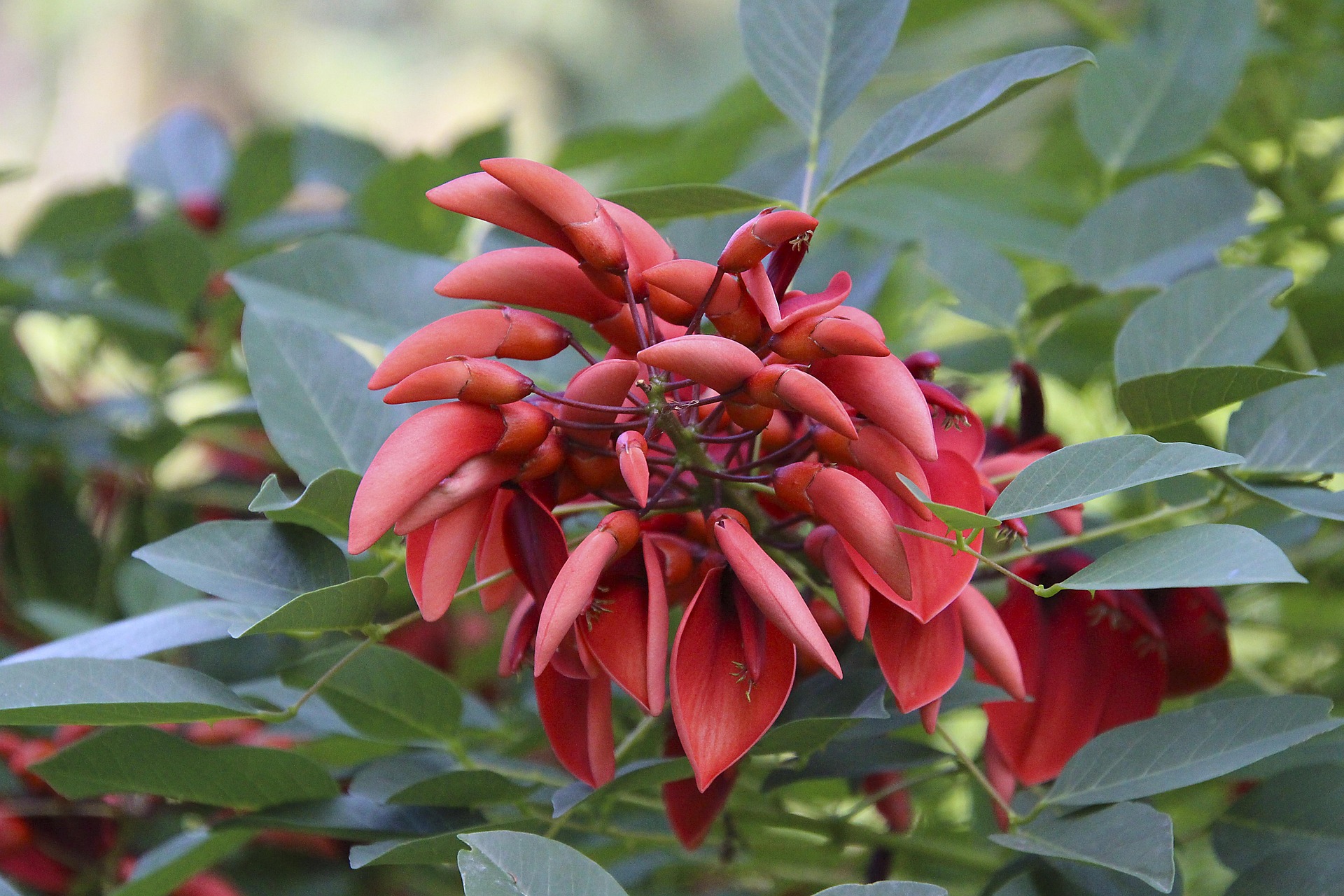
Der Baum erreicht meist 5–10 Meter Höhe, in günstigen Klimazonen auch mehr. Charakteristisch sind die bizarr geformten, leuchtend karminroten Blüten, die in dichten Trauben stehen und an einen Hahnenkamm erinnern – daher der Artname crista-galli (lat. = Hahnenkamm). Die Blütezeit ist spektakulär und macht die Pflanze zu einem beliebten Ziergehölz in Parks und Gärten warmer Regionen.
Wie viele Hülsenfrüchtler kann auch Erythrina Stickstoff im Boden binden und trägt so zur Bodenfruchtbarkeit bei. Ihre Blüten liefern reichlich Nektar und ziehen Kolibris, Bienen und Schmetterlinge an.
Besonders interessant: Trotz ihrer Schönheit ist die Pflanze giftig – Rinde und Samen enthalten Alkaloide, die in hoher Dosis gefährlich wirken. Dennoch wird sie in ihrer Heimat traditionell in der Volksmedizin genutzt.
Heute ist die Erythrina crista-galli nicht nur Symbolpflanze Südamerikas, sondern auch in warmen Regionen weltweit ein beliebter Schmuckbaum, der mit seinen spektakulären Blüten echtes Tropenflair verbreitet.

Family

Fabaceae
Erythrina crista-galli, known as the coral tree or cockspur coral tree, belongs to the legume family (Fabaceae). It originates from the subtropical regions of South America – primarily Brazil, Uruguay and Argentina – where it is deeply rooted in the culture. In Argentina, it is even considered the national flower.
The tree usually reaches a height of 5–10 metres, and even more in favourable climates. It is characterised by its bizarrely shaped, bright carmine-red flowers, which grow in dense clusters and resemble a cock’s comb – hence the species name crista-galli (Latin for cock’s comb). The flowering period is spectacular, making the plant a popular ornamental tree in parks and gardens in warm regions.
Like many legumes, Erythrina can fix nitrogen in the soil, thus contributing to soil fertility. Its flowers provide abundant nectar and attract hummingbirds, bees and butterflies.
Particularly interesting: despite its beauty, the plant is poisonous – its bark and seeds contain alkaloids that are dangerous in high doses. Nevertheless, it is traditionally used in folk medicine in its native country.
Today, Erythrina crista-galli is not only a symbolic plant of South America, but also a popular ornamental tree in warm regions around the world, spreading a real tropical flair with its spectacular flowers.

Familia

Fabaceae
La Erythrina crista-galli, conocida como árbol de coral o árbol de coral de cresta de gallo, pertenece a la familia de las leguminosas (Fabaceae). Es originaria de las regiones subtropicales de Sudamérica, especialmente de Brasil, Uruguay y Argentina, donde está profundamente arraigada en la cultura. En Argentina, incluso se considera la flor nacional.
El árbol suele alcanzar una altura de entre 5 y 10 metros, e incluso más en climas favorables. Se caracteriza por sus flores de forma extraña y color carmín brillante, que crecen en racimos densos y recuerdan a la cresta de un gallo, de ahí el nombre de la especie crista-galli (lat. = cresta de gallo). La floración es espectacular y convierte a la planta en un árbol ornamental muy popular en parques y jardines de regiones cálidas.
Al igual que muchas leguminosas, la Erythrina puede fijar nitrógeno en el suelo, lo que contribuye a su fertilidad. Sus flores proporcionan abundante néctar y atraen a colibríes, abejas y mariposas.
Especialmente interesante: a pesar de su belleza, la planta es tóxica, ya que la corteza y las semillas contienen alcaloides que son peligrosos en dosis elevadas. Sin embargo, en su lugar de origen se utiliza tradicionalmente en la medicina popular.
Hoy en día, la Erythrina crista-galli no solo es una planta simbólica de Sudamérica, sino también un árbol ornamental muy popular en las regiones cálidas de todo el mundo, que con sus espectaculares flores transmite un auténtico aire tropical.