

Galium Aparine

Kletten-Labkraut

Englische Bezeichnung: Cleavers and Bedstraw, but also including Stickywilly, Catchweed, Goosegrass, and Grip Grass
Spanische Bezeichnung: Amor del Hortelano, Hierba Pegajosa, Galioides

Familie  

Rötegewächse
Das Kletten-Labkraut gehört zur Familie der Rötegewächse (Rubiaceae) und ist in Europa, Asien und Nordamerika weit verbreitet. Es wächst bevorzugt an Wegrändern, Zäunen und Hecken.
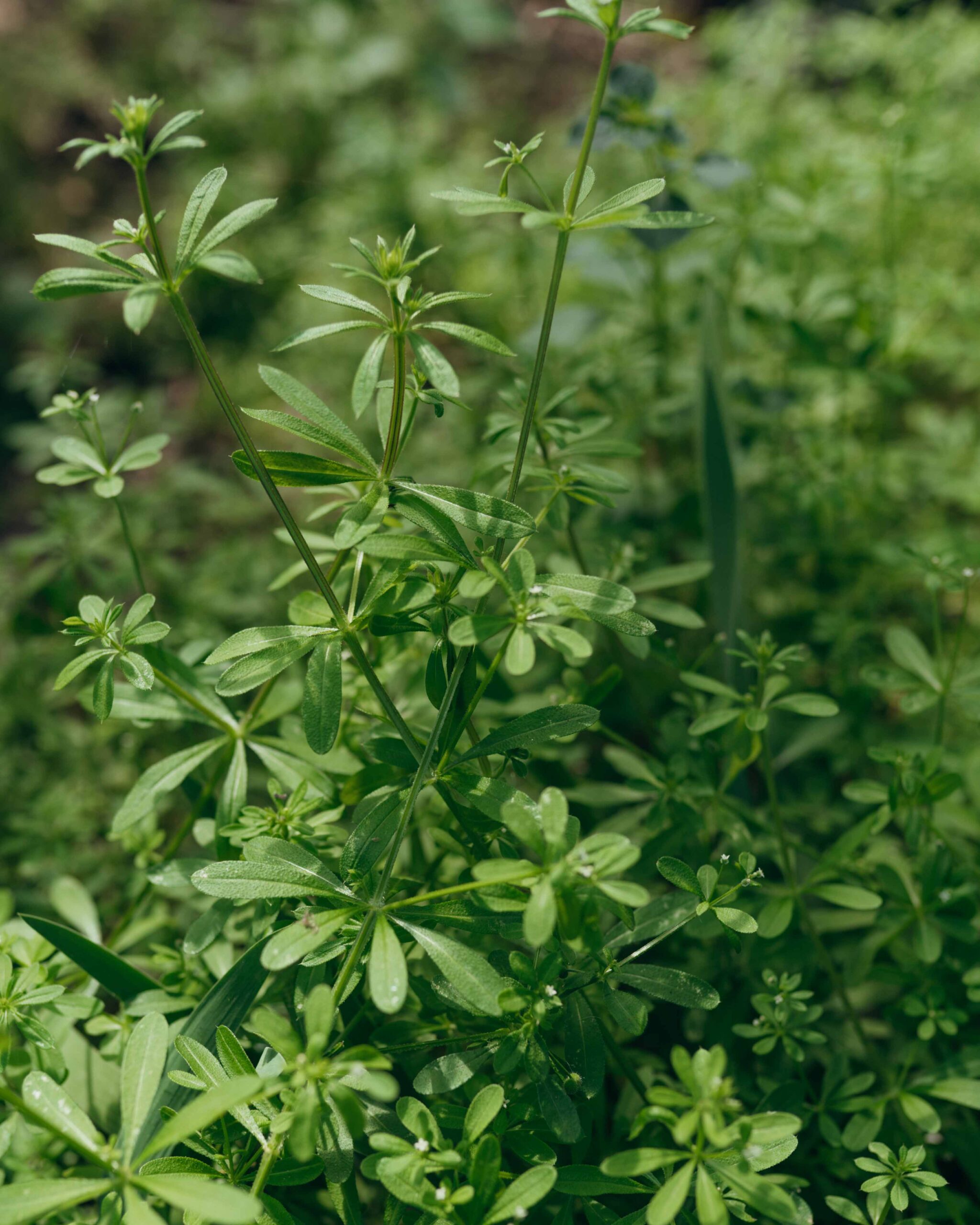
Die Pflanze ist leicht zu erkennen: Ihre langen, dünnen Stängel mit quirlig angeordneten Blättern sind rau behaart und haften durch kleine Widerhaken an Kleidung, Tierfell oder anderen Pflanzen – daher der Name „Kletten“-Labkraut. Diese Eigenschaft hilft ihm bei der Verbreitung und beim Emporklettern.
Schon in alten Zeiten fand das Labkraut vielfältige Verwendung. In der Volksmedizin wurde es als entwässerndes und reinigendes Kraut geschätzt. Auch heute gilt es als mildes Wildkraut, das junge Triebe sogar in der Küche genutzt werden können – etwa in Salaten oder als Spinat-Ersatz.
Ökologisch spielt es eine Rolle als Nahrungspflanze für Raupen verschiedener Schmetterlingsarten und als Lebensraum für Insekten.
Das Kletten-Labkraut ist ein unscheinbarer, aber faszinierender Begleiter der Kulturlandschaft – ein Kletterkünstler, Heil- und Wildkraut mit großem Nutzen für Mensch und Natur.

Family

Rubiaceae
Burdock belongs to the Rubiaceae family and is widespread in Europe, Asia and North America. It prefers to grow on roadsides, fences and hedges.
The plant is easy to recognise: its long, thin stems with whorled leaves are rough and hairy and stick to clothing, animal fur or other plants thanks to small barbs – hence the name “bur” bedstraw. This characteristic helps it to spread and climb.
Bedstraw has been used in many ways since ancient times. In folk medicine, it was valued as a diuretic and cleansing herb. Even today, it is considered a mild wild herb, and its young shoots can even be used in cooking – for example, in salads or as a substitute for spinach.
Ecologically, it plays a role as a food plant for caterpillars of various butterfly species and as a habitat for insects.
Cleavers is an inconspicuous but fascinating companion to the cultural landscape – a climbing artist, medicinal and wild herb with great benefits for humans and nature.

Familia

Rubiaceae
La galioides es una planta de la familia de las rubiáceas (Rubiaceae) muy extendida en Europa, Asia y Norteamérica. Crece preferentemente en los bordes de los caminos, vallas y setos.
La planta es fácil de reconocer: sus tallos largos y delgados con hojas dispuestas en espiral son vellosos y se adhieren a la ropa, al pelaje de los animales u otras plantas gracias a sus pequeñas púas, de ahí su nombre «galio espinoso». Esta característica le ayuda a propagarse y trepar.
Ya en la antigüedad, la galioides se utilizaba para múltiples fines. En la medicina popular se apreciaba como hierba diurética y depurativa. Hoy en día también se considera una hierba silvestre suave, cuyos brotes jóvenes se pueden utilizar incluso en la cocina, por ejemplo, en ensaladas o como sustituto de las espinacas.
Desde el punto de vista ecológico, desempeña un papel importante como planta alimenticia para las orugas de diversas especies de mariposas y como hábitat para los insectos.
La galioides es una compañera discreta pero fascinante del paisaje cultural, una trepadora experta, una hierba medicinal y silvestre de gran utilidad para el ser humano y la naturaleza.