Artemisia canariensis / thuscula

KANARISCHER BEIFUSS

Englische Bezeichnung: Canary Inciendo, Mugwort
Spanische Bezeichnung: Incienso

Familie  

Korbblütler (Asteraceae)

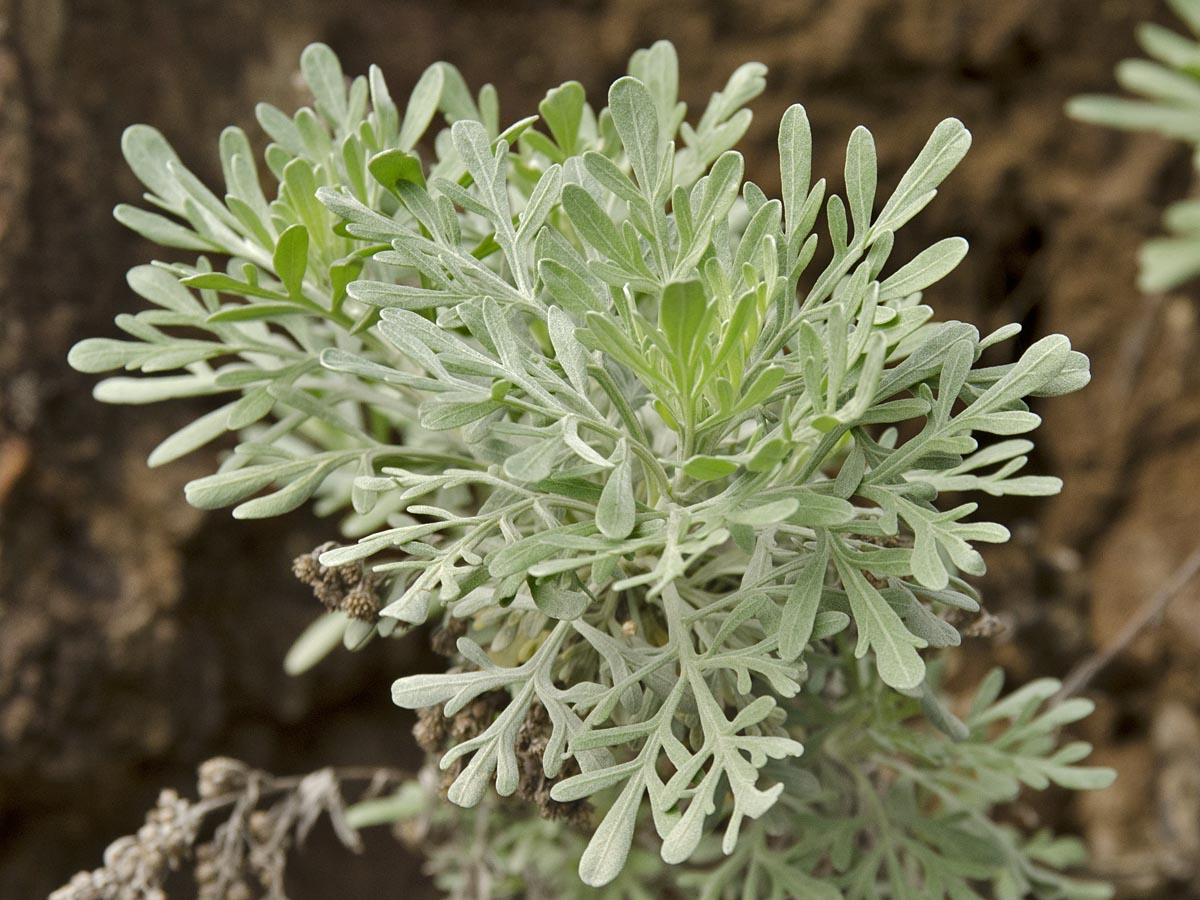
Er ist ein Endemit der Kanarischen Inseln, kommt aber nicht auf Fuerteventura und Lanzarote vor. Der Strauch aus der Familie der Korbblütler verzweigt stark.  Seine Blätter sind gefiedert und graugrün. Bei Trockenheit werden sie silbrig weiß.

Am geeigneten Standort wird der Kanarische Beifuss bis zu 1 m hoch. Er mag überwiegend trockene Zonen (semiarid). Der Boden sollte arm und trocken sein. Auch Steine stören den Strauch nicht, was er braucht, ist Sonne.

Der spanische Name „incienso“ bedeutet Weihrauch

Der Grund dafür ist der starke aromatische Duft, den die Pflanze verströmt.

An heißen Sommertagen ist das Aroma besonders intensiv.

Das Kraut wird seit alters her auch zum Räuchern genommen, wie der echte Weihrauch. Nur der ist ein Baum.

Sonnige BSchuchten mag er besonders gern.  Manchmal wird er zur Zierde angepflanzt.  Von Mai bis Juli schmücken ihn kleine, gelbe, kugelige Blüten-köpfchen.

Die Vermehrung erfolgt durch Samen.

Das getrocknete Kraut wird auch zum Räuchern verwendet, wie der echte Weihrauch.


Family

Compositae (Asteraceae)

It is endemic to the Canary Islands, but does not occur on Fuerteventura and Lanzarote. The shrub from the Asteraceae family branches profusely. Its leaves are pinnate and grey-green. In dry conditions, they turn silvery white.
In a suitable location, Canary Island mugwort can grow up to 1 m high. It prefers predominantly dry (semiarid) areas. The soil should be poor and dry. Stones do not bother the shrub; what it needs is sun.
The Spanish name ‘incienso’ means incense
The reason for this is the strong aromatic scent that the plant exudes.
The aroma is particularly intense on hot summer days.
The herb has also been used for incense since ancient times, just like real incense. Only that is a tree.
It particularly likes sunny locations. It is sometimes planted for decorative purposes. From May to July, it is adorned with small, yellow, spherical flower heads.
It is propagated by seed.
The dried herb is also used for incense, just like real incense.


Familia

Compus (Asteraceae)

Es endémica de las Islas Canarias, pero no se encuentra en Fuerteventura ni en Lanzarote. Este arbusto de la familia de las asteráceas tiene muchas ramificaciones. Sus hojas son pinnadas y de color verde grisáceo. En épocas de sequía, adquieren un tono blanco plateado.
En un lugar adecuado, el ajenjo canario puede alcanzar hasta 1 m de altura. Prefiere las zonas predominantemente secas (semiáridas). El suelo debe ser pobre y seco. Las piedras tampoco le molestan, lo que necesita es sol.
El nombre español «incienso» hace referencia
al fuerte aroma que desprende la planta.
En los días calurosos de verano, el aroma es especialmente intenso.
Desde la antigüedad, esta hierba se utiliza para quemar como incienso, al igual que el incienso auténtico. Solo que este último es un árbol.
Le gustan especialmente los lugares soleados. A veces se planta con fines decorativos. De mayo a julio, lo adornan pequeñas cabezas de flores amarillas y esféricas.
La propagación se realiza mediante semillas.
La hierba seca también se utiliza para quemar incienso, al igual que el incienso auténtico.