
Phoenix canariensis

KANARISCHE DATTELPALME

Englische Bezeichnung: Canary Island Date Palm
Spanische Bezeichnung: Palma Fénix, Palma Canaria

Familie  

Palmengewächse (Arecaceae)
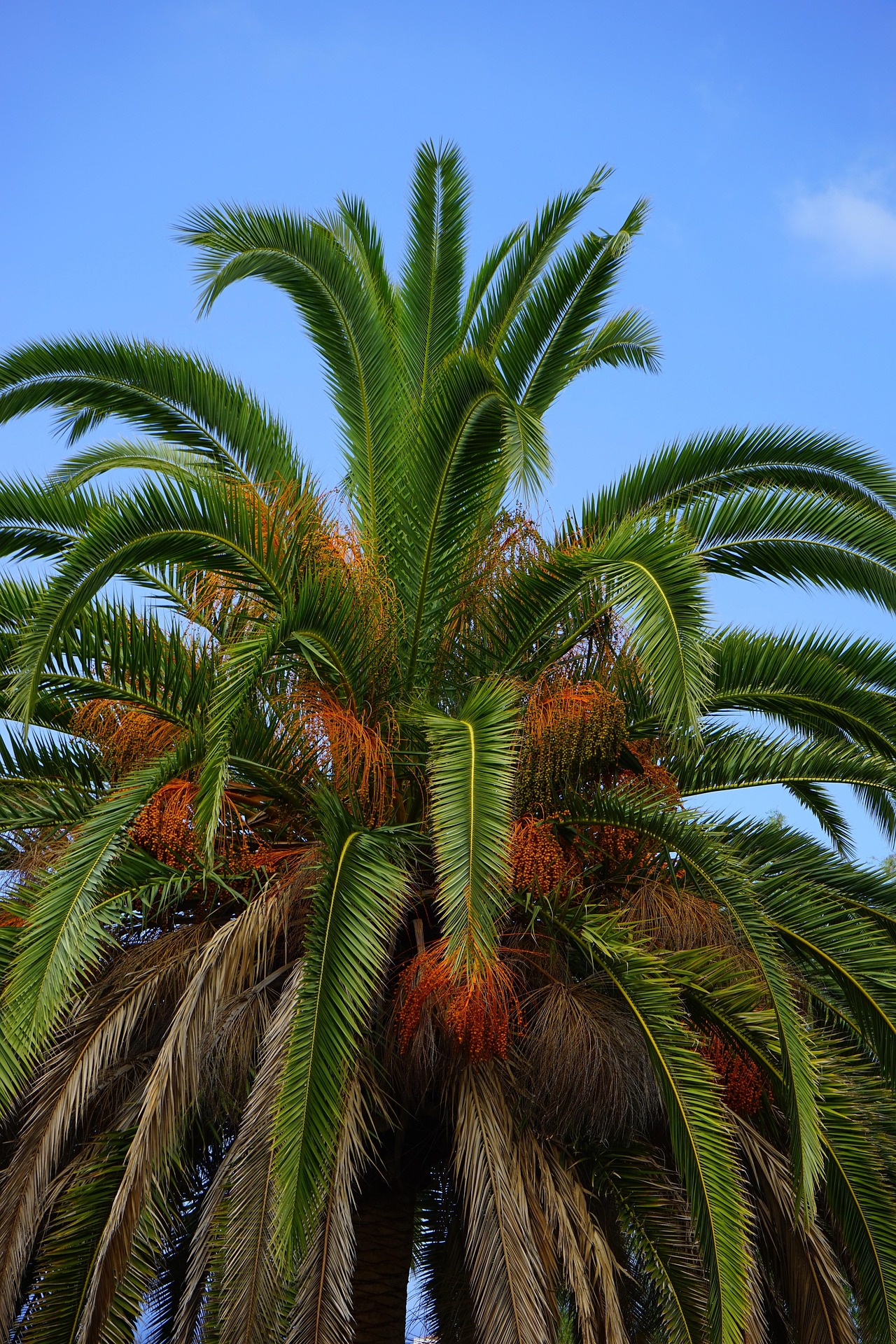
Die Phoenix canariensis, auch Kanarische Dattelpalme genannt, ist eine stattliche Palmenart aus der Familie der Palmengewächse (Arecaceae) und endemisch auf den Kanarischen Inseln. Sie kann bis zu 20 Meter hoch werden und besitzt einen kräftigen, massiven Stamm mit dichter, breiter Krone aus bis zu 100 gefiederten Blättern, die bis zu 5 Meter lang sein können. Im Frühjahr erscheinen große Blütenstände mit gelblichen, duftenden Blüten, aus denen sich kleine orangebraune Datteln entwickeln, die zwar essbar, aber faserig und wenig aromatisch sind.
Die Kanarische Dattelpalme ist eng mit der Echten Dattelpalme (Phoenix dactylifera) verwandt, wird jedoch vor allem als Zier- und Kulturpflanze genutzt. Sie ist trockenheitsresistent, verträgt salzhaltige Luft und wird weltweit in mediterranen und subtropischen Regionen als Alleebaum, Park- oder Gartenpflanze geschätzt. Besonders auf den Kanarischen Inseln spielt sie auch eine ökologische Rolle, da sie Lebensraum für zahlreiche Tierarten bietet.
Kulturell ist Phoenix canariensis ein Symbol der Kanaren und wird dort als nationales Naturdenkmal geschützt. Sie gilt als Zeichen für Stärke, Beständigkeit und Wohlstand. Allerdings ist sie in vielen Regionen durch den eingeschleppten Palmrüssler (Rhynchophorus ferrugineus) bedroht, der ganze Bestände vernichten kann.

Family

Palm (Arecaceae)
Phoenix canariensis, also known as the Canary Island date palm, is a stately palm species from the palm family (Arecaceae) and is endemic to the Canary Islands. It can grow up to 20 metres tall and has a strong, solid trunk with a dense, broad crown of up to 100 feathery leaves that can be up to 5 metres long. In spring, large inflorescences appear with yellowish, fragrant flowers, from which small orange-brown dates develop that are edible but fibrous and not very aromatic.
The Canary Island date palm is closely related to the true date palm (Phoenix dactylifera), but is mainly used as an ornamental and cultivated plant. It is drought-resistant, tolerates salty air and is valued worldwide in Mediterranean and subtropical regions as an avenue tree, park or garden plant. It also plays an ecological role, particularly in the Canary Islands, as it provides a habitat for numerous animal species.
Culturally, Phoenix canariensis is a symbol of the Canary Islands and is protected there as a national natural monument. It is considered a sign of strength, stability and prosperity. However, in many regions it is threatened by the introduced red palm weevil (Rhynchophorus ferrugineus), which can destroy entire populations.

Familia

Palmeras (Arecaceae)
La Phoenix canariensis, también conocida como palmera canaria, es una especie de palmera majestuosa de la familia de las arecáceas (Arecaceae) y endémica de las Islas Canarias. Puede alcanzar hasta 20 metros de altura y tiene un tronco fuerte y macizo con una copa densa y ancha de hasta 100 hojas plumosas que pueden medir hasta 5 metros de largo. En primavera aparecen grandes inflorescencias con flores amarillentas y fragantes, de las que se desarrollan pequeños dátiles de color marrón anaranjado, que son comestibles, pero fibrosos y poco aromáticos.
La palmera canaria está estrechamente relacionada con la palmera datilera (Phoenix dactylifera), pero se utiliza principalmente como planta ornamental y cultivada. Es resistente a la sequía, tolera el aire salino y es apreciada en todo el mundo en las regiones mediterráneas y subtropicales como árbol de avenida, planta de parque o jardín. Especialmente en las Islas Canarias, también desempeña un papel ecológico, ya que proporciona un hábitat para numerosas especies animales.
Culturalmente, la Phoenix canariensis es un símbolo de las Islas Canarias, donde está protegida como monumento natural nacional. Se considera un signo de fuerza, estabilidad y prosperidad. Sin embargo, en muchas regiones está amenazada por el picudo rojo (Rhynchophorus ferrugineus), una plaga introducida que puede destruir poblaciones enteras.