Rumex lunaria

Kanaren-ampfer

Englische Bezeichnung: Canarian Island Sorrel
Spanische Bezeichnung: Vinagrera

Familie  

Knöterichgewächse (Polygonaceae)
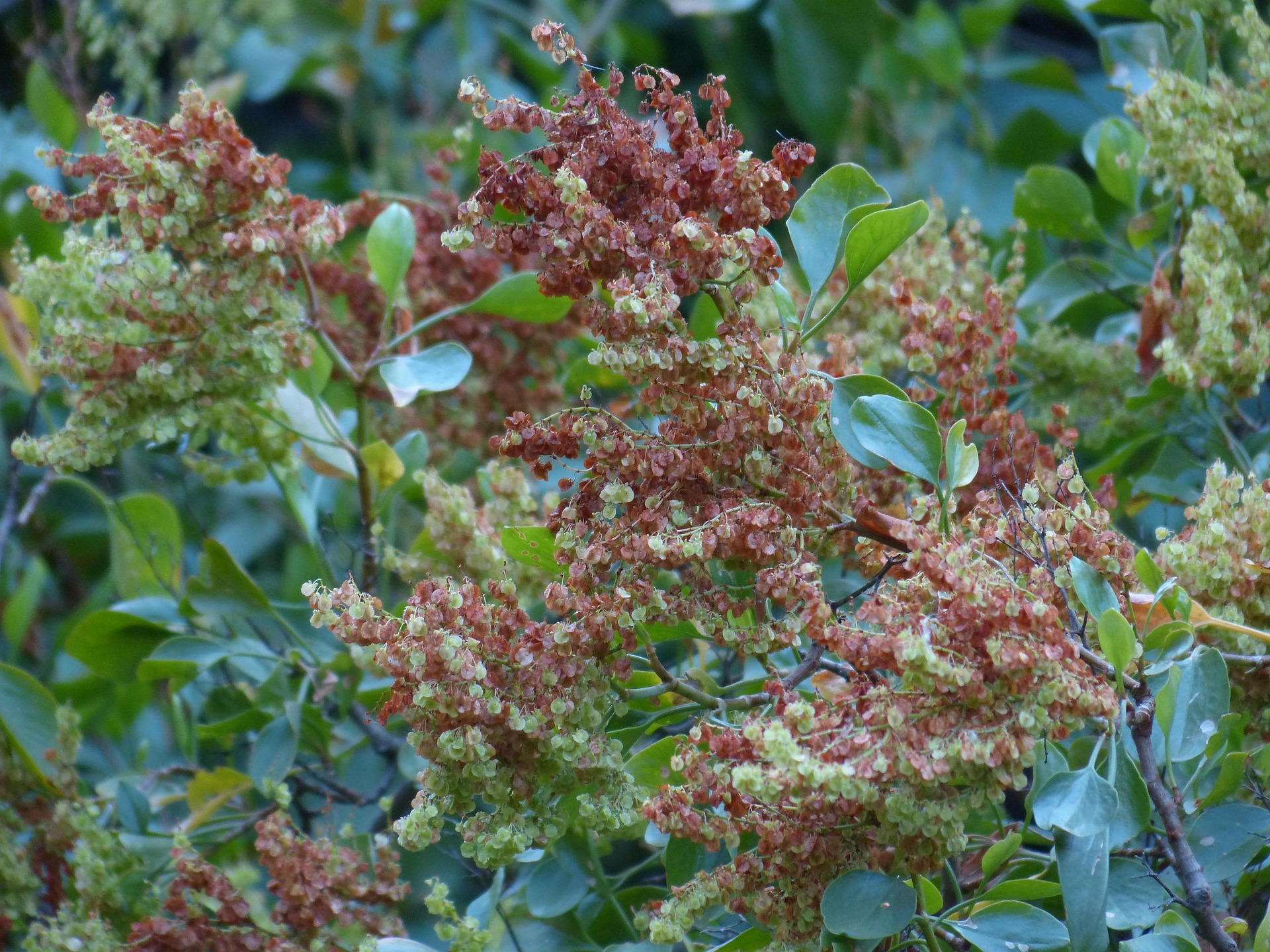
Die Rumex lunaria, auch Kanaren-Sauerampfer genannt, ist eine endemische Pflanzenart der Kanarischen Inseln und gehört zur Familie der Knöterichgewächse (Polygonaceae). Sie wächst bevorzugt in felsigen, sonnigen Lagen bis etwa 1.000 Meter Höhe und bildet kräftige, aufrechte Stauden mit großen, rundlich-herzförmigen Blättern, die der Pflanze den Beinamen „lunaria“ (mondförmig) gaben. Auffällig sind ihre rötlich-grünen bis purpurfarbenen Fruchtflügel, die nach der Blüte entstehen und die Pflanze besonders dekorativ wirken lassen.
Traditionell wurde Rumex lunaria auf den Kanaren medizinisch genutzt: Blätter und Wurzeln dienten zur Behandlung von Hautproblemen, Verdauungsbeschwerden und als leichtes Abführmittel, ähnlich wie andere Ampferarten. In der Volksheilkunde galt sie zudem als blutreinigend und stärkend. Botanisch interessant ist ihre Anpassungsfähigkeit an das trockene Inselklima: Sie kann in kargen, nährstoffarmen Böden überleben und trägt so zur Stabilisierung der Vegetation in erosionsgefährdeten Zonen bei.
Heute ist Rumex lunaria vor allem von regionaler Bedeutung, sowohl als Symbol der kanarischen Flora als auch wegen ihres ökologischen Wertes für die Biodiversität der Inseln. Sie vereint robuste Anpassungen mit traditioneller Heilwirkung und ästhetischem Reiz, was sie zu einer bemerkenswerten Pflanze der Kanaren macht.

Family

Knotweed (Polygonaceae)
Rumex lunaria, also known as Canary Island sorrel, is a plant species endemic to the Canary Islands and belongs to the knotweed family (Polygonaceae). It prefers to grow in rocky, sunny locations up to an altitude of around 1,000 metres and forms strong, upright shrubs with large, rounded, heart-shaped leaves, which gave the plant its nickname “lunaria” (moon-shaped). Its reddish-green to purple fruit wings, which develop after flowering and make the plant particularly decorative, are striking.
Rumex lunaria was traditionally used medicinally in the Canary Islands: the leaves and roots were used to treat skin problems and digestive complaints and as a mild laxative, similar to other sorrel species. In folk medicine, it was also considered to be blood-purifying and strengthening. Botanically interesting is its adaptability to the dry island climate: it can survive in barren, nutrient-poor soils and thus contributes to the stabilisation of vegetation in areas prone to erosion.
Today, Rumex lunaria is primarily of regional importance, both as a symbol of Canarian flora and because of its ecological value for the biodiversity of the islands. It combines robust adaptations with traditional healing properties and aesthetic appeal, making it a remarkable plant of the Canary Islands.

Familia

Polygonaceae
La Rumex lunaria, también conocida como acedera de las Canarias, es una especie vegetal endémica de las Islas Canarias y pertenece a la familia de las poligonáceas (Polygonaceae). Crece preferentemente en lugares rocosos y soleados hasta unos 1000 metros de altitud y forma robustas plantas perennes erectas con hojas grandes y redondeadas en forma de corazón, que le han valido el sobrenombre de «lunaria» (en forma de luna). Destacan sus alas fructíferas de color verde rojizo a púrpura, que aparecen después de la floración y dan a la planta un aspecto especialmente decorativo.
Tradicionalmente, la Rumex lunaria se utilizaba con fines medicinales en las Islas Canarias: las hojas y las raíces se utilizaban para tratar problemas cutáneos, trastornos digestivos y como laxante suave, al igual que otras especies de acedera. En la medicina popular también se consideraba depurativa y reconstituyente. Desde el punto de vista botánico, es interesante su capacidad de adaptación al clima seco de la isla: puede sobrevivir en suelos áridos y pobres en nutrientes, lo que contribuye a estabilizar la vegetación en zonas propensas a la erosión.
Hoy en día, Rumex lunaria tiene sobre todo importancia regional, tanto como símbolo de la flora canaria como por su valor ecológico para la biodiversidad de las islas. Combina una gran capacidad de adaptación con propiedades curativas tradicionales y un atractivo estético, lo que la convierte en una planta notable de las Canarias.