
Datura inoxia

GROßBLÜTIGER STECHAPFEL

Englische Bezeichnung: Pricklyburr, Recurved thorn-apple, downy thorn-apple, Indian-apple, lovache, moonflower, nacazcul, toloatzin, toloaxihuitl, tolguache, toloache
Spanische Bezeichnung: Nacazcul, Toloatzin, toloache, tártago, yerba del disco

Familie  

Nachtschattengewächse (Solanaceae)

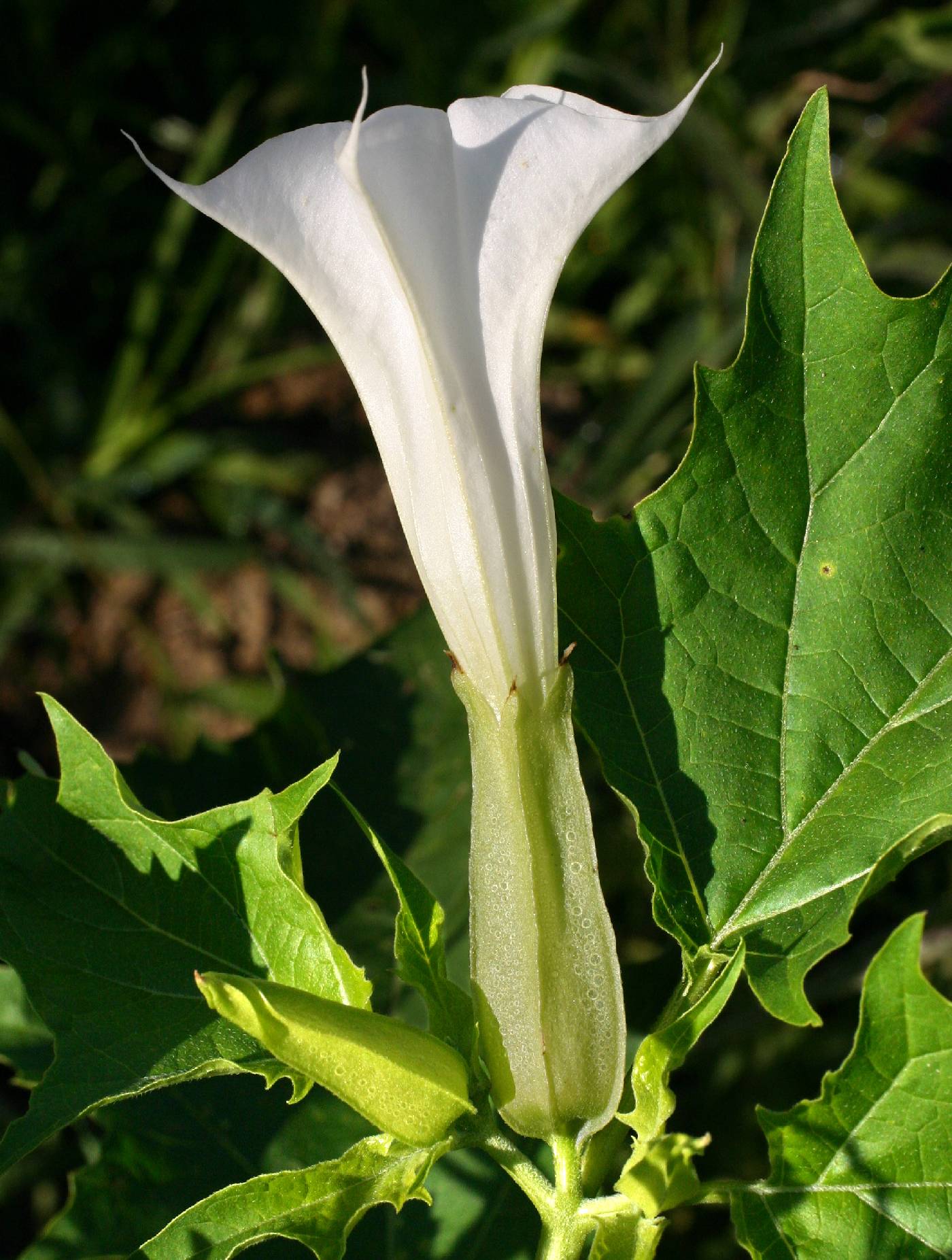
Der Großblütige Stechapfel (Datura metel) gehört zur Familie der Nachtschattengewächse und fällt sofort durch seine großen, trichterförmigen Blüten auf, die in Weiß, Violett oder Purpur leuchten. Ursprünglich stammt die Pflanze aus Indien und Südostasien, hat sich aber auch in tropischen und subtropischen Regionen weltweit verbreitet.
Seit Jahrhunderten spielte sie eine besondere Rolle in der Kulturgeschichte. In Indien wurde sie in religiösen Ritualen verehrt und in der ayurvedischen Medizin unter strenger Kontrolle eingesetzt. Auch in China fand sie Verwendung in Heilpraktiken. Gleichzeitig tauchte der Stechapfel in vielen Mythen und Legenden auf, oft als „Pflanze der Götter“ oder als Werkzeug für Schamanen und Hexen.
So faszinierend die Pflanze aussieht, so gefährlich ist sie auch: Alle Teile enthalten Tropan-Alkaloide wie Atropin, Scopolamin und Hyoscyamin. Schon kleine Mengen können Halluzinationen, Krämpfe und lebensbedrohliche Vergiftungen auslösen. Deshalb wird der Großblütige Stechapfel heute vor allem als Zierpflanze geschätzt und nicht mehr medizinisch genutzt.
Sein Ruf schwankt zwischen Schönheit und Gefahr – eine Pflanze, die gleichermaßen fasziniert und Respekt einflößt.

Family

Nightshade (Solanaceae)

The large-flowered thorn apple (Datura metel) belongs to the nightshade family and immediately catches the eye with its large, funnel-shaped flowers, which glow in white, violet or purple. The plant originates from India and Southeast Asia, but has also spread to tropical and subtropical regions worldwide.
It has played a special role in cultural history for centuries. In India, it was revered in religious rituals and used under strict control in Ayurvedic medicine. It was also used in healing practices in China. At the same time, the thorn apple appeared in many myths and legends, often as the ‘plant of the gods’ or as a tool for shamans and witches.
As fascinating as the plant looks, it is also dangerous: all parts contain tropane alkaloids such as atropine, scopolamine and hyoscyamine. Even small amounts can cause hallucinations, convulsions and life-threatening poisoning. For this reason, the large-flowered datura is now mainly valued as an ornamental plant and is no longer used medicinally.
Its reputation fluctuates between beauty and danger – a plant that is both fascinating and awe-inspiring.

Familia

Solanaceae

La datura metel pertenece a la familia de las solanáceas y llama inmediatamente la atención por sus grandes flores en forma de embudo, que brillan en blanco, violeta o púrpura. La planta es originaria de la India y el sudeste asiático, pero se ha extendido por regiones tropicales y subtropicales de todo el mundo.
Durante siglos ha desempeñado un papel especial en la historia cultural. En la India se veneraba en rituales religiosos y se utilizaba en la medicina ayurvédica bajo estricto control. También se utilizaba en prácticas curativas en China. Al mismo tiempo, la datura aparecía en muchos mitos y leyendas, a menudo como «planta de los dioses» o como herramienta para chamanes y brujas.
Tan fascinante como parece la planta, tan peligrosa es: todas sus partes contienen alcaloides tropánicos como la atropina, la escopolamina y la hiosciamina. Incluso pequeñas cantidades pueden provocar alucinaciones, convulsiones e intoxicaciones potencialmente mortales. Por ello, hoy en día la datura stramonium se aprecia principalmente como planta ornamental y ya no se utiliza con fines medicinales.
Su reputación oscila entre la belleza y el peligro: una planta que fascina e inspira respeto a partes iguales.