
Delonix regia

FLAMMENBAUM

Englische Bezeichnung: Royal Poinciana, Flamboyant, Flame Tree, Flame of the Forest
Spanische Bezeichnung: Flamboyant

Familie  

Hülsenfrüchtler (Fabaceae)
Kaum ein Baum verkörpert tropische Lebensfreude so sehr wie der Flammenbaum, botanisch Delonix regia. Ursprünglich stammt er aus Madagaskar, doch seine Schönheit hat ihn längst zu einem Weltreisenden gemacht: In Städten von Indien über die Karibik bis Südamerika taucht er Straßen und Plätze in ein leuchtend rotes Blütenmeer.
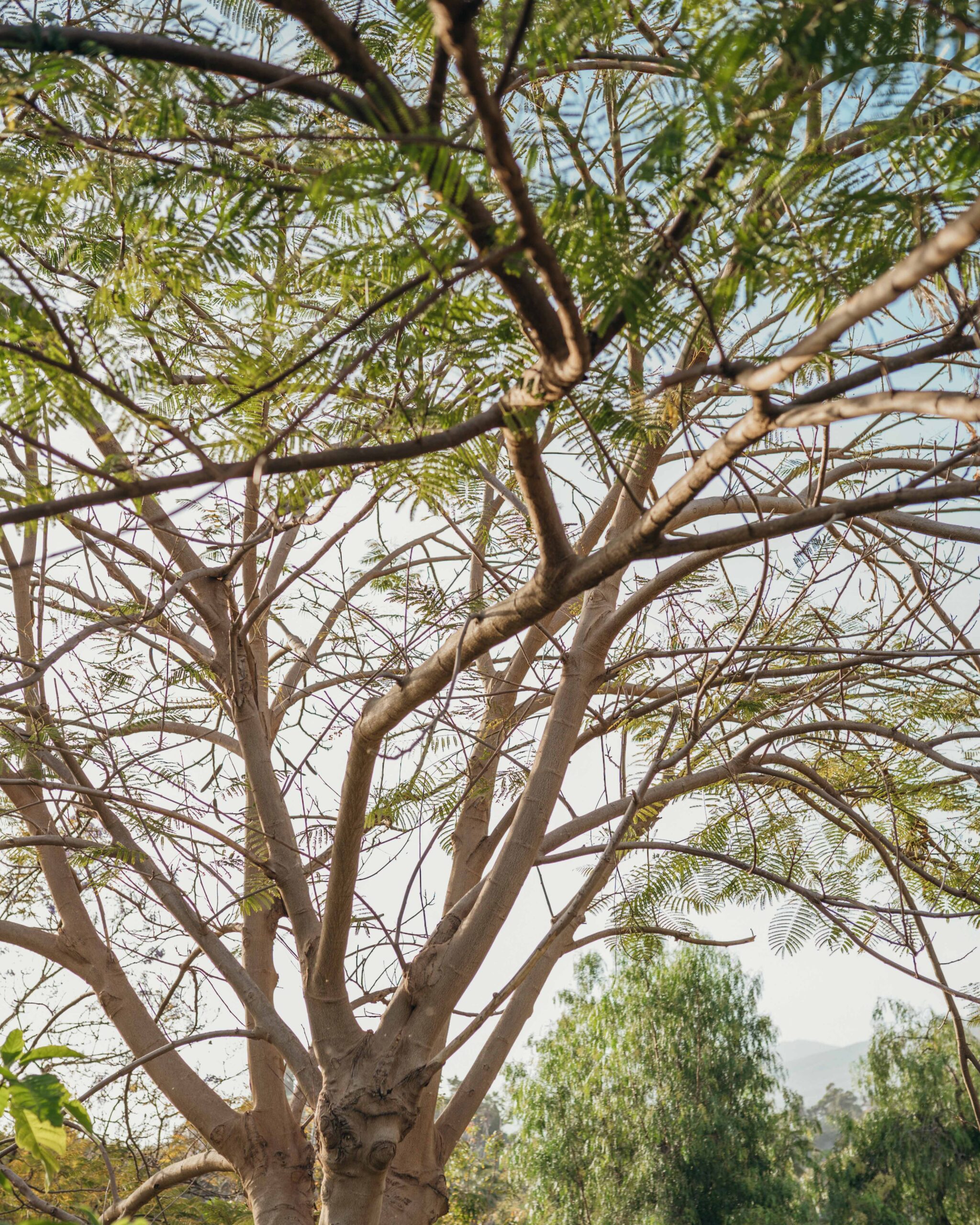
Die Krone des Flammenbaums ist breit und schirmförmig – ideal, um Schatten zu spenden. Doch was ihn wirklich berühmt macht, sind seine Blüten: Feuerrot, manchmal orange oder sogar gelb, bedecken sie den ganzen Baum und lassen ihn wie ein brennendes Dach erscheinen. Kein Wunder, dass er vielerorts als „Flamboyant Tree“ bekannt ist.
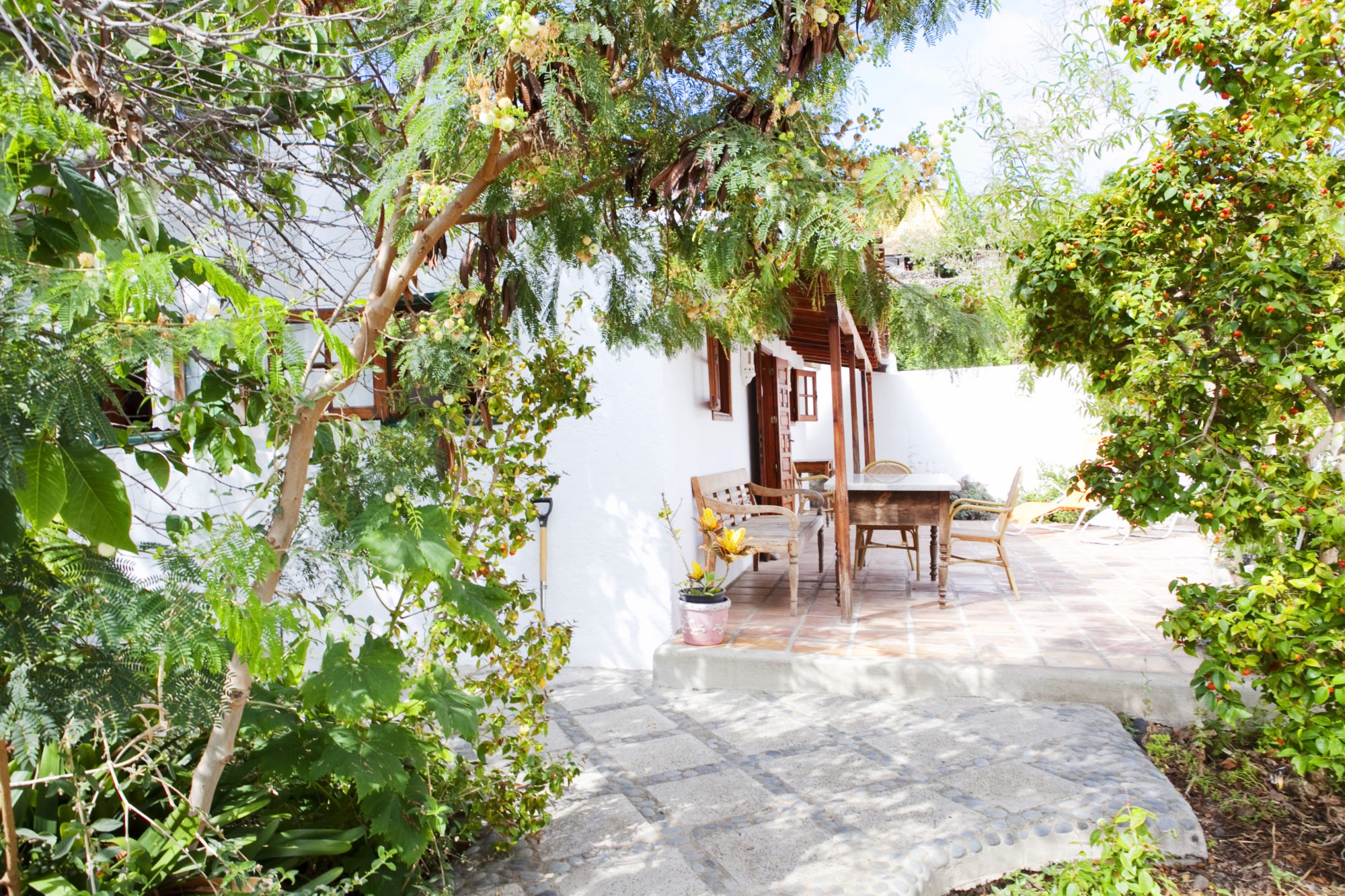
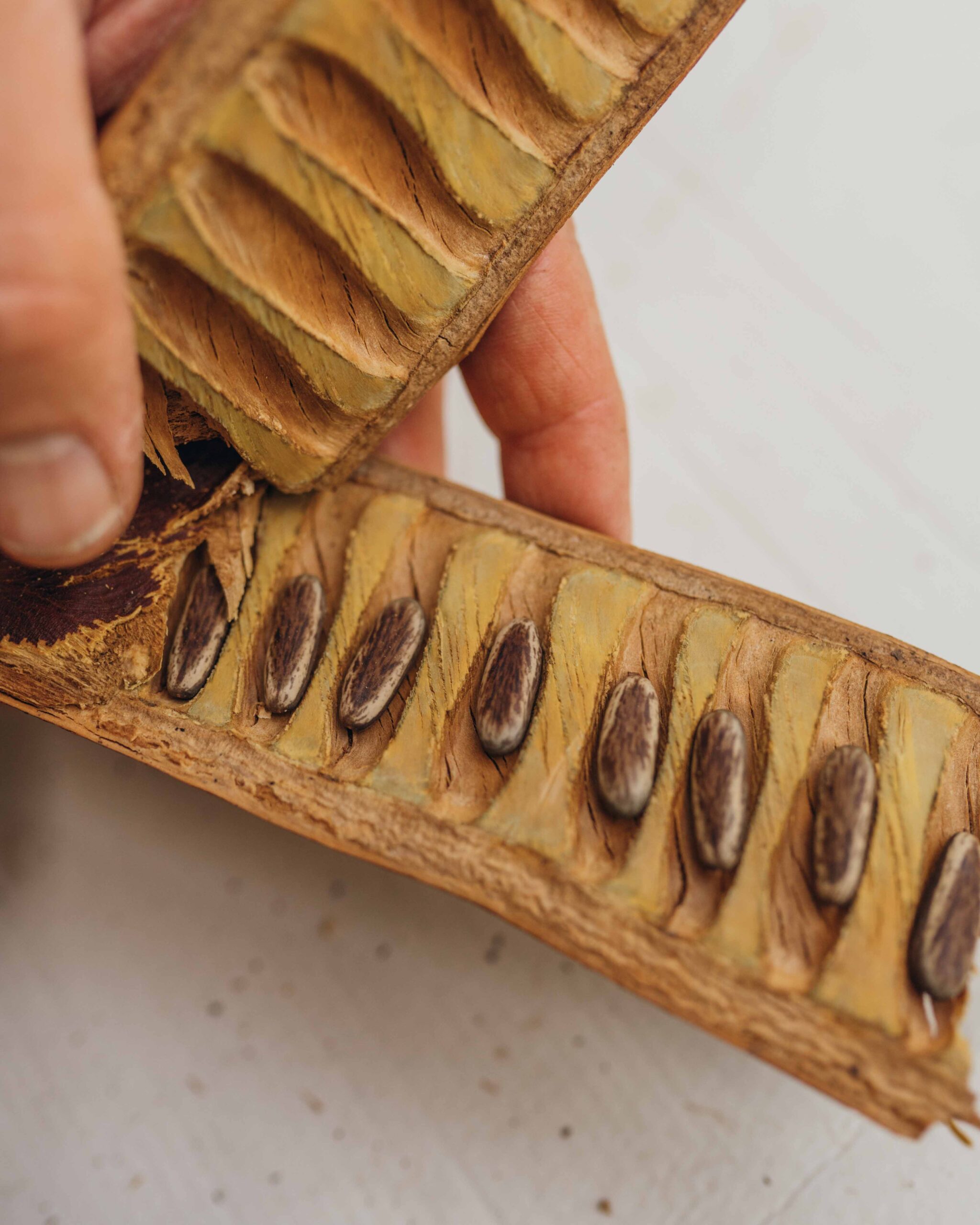
Auch abseits der Blüte ist er beeindruckend. Seine Blätter wirken fast wie Farnwedel, bis zu einem halben Meter lang und fein gefiedert. Nach der Blüte entwickeln sich riesige, dunkelbraune Schoten, die bis zu 60 Zentimeter messen und lange am Baum hängen bleiben – fast wie dekorative Ornamente.
In seiner Heimat ist der Flammenbaum bedroht, weil seine natürlichen Lebensräume schwinden. In anderen Ländern gilt er dagegen als Zierde, manchmal aber auch als zu ausbreitungsfreudig. Trotz dieser Gegensätze hat er eine besondere Stellung: Auf den Malediven ist er sogar Nationalbaum.
So verbindet Delonix regia Naturwunder, Kultursymbol und ein kleines Stück tropische Magie – ein Baum, der nicht nur Schatten spendet, sondern auch Staunen.

Family

Legumes (Fabaceae)
Hardly any other tree embodies tropical joie de vivre as much as the flamboyant tree, botanically known as Delonix regia. Originally from Madagascar, its beauty has long since made it a world traveller: in cities from India to the Caribbean to South America, it bathes streets and squares in a sea of bright red flowers.
The crown of the flamboyant tree is broad and umbrella-shaped – ideal for providing shade. But what really makes it famous are its flowers: fiery red, sometimes orange or even yellow, they cover the entire tree, making it look like a burning roof. No wonder it is known in many places as the ‘flamboyant tree’.
Even when not in bloom, it is impressive. Its leaves look almost like fern fronds, up to half a metre long and finely feathered. After flowering, huge, dark brown pods develop, measuring up to 60 centimetres and remaining on the tree for a long time – almost like decorative ornaments.
In its native habitat, the flamboyant tree is endangered because its natural habitats are disappearing. In other countries, however, it is considered an ornamental plant, but sometimes also too prolific. Despite these contrasts, it has a special status: in the Maldives, it is even the national tree.
Delonix regia thus combines natural wonder, cultural symbol and a little piece of tropical magic – a tree that not only provides shade, but also amazement.

Familia

Leguminosa (Fabaceae)
Pocos árboles encarnan la alegría tropical como el árbol de fuego, cuyo nombre botánico es Delonix regia. Es originario de Madagascar, pero su belleza lo ha convertido desde hace tiempo en un viajero mundial: en ciudades desde la India hasta el Caribe y Sudamérica, baña calles y plazas en un mar de flores de color rojo brillante.
La copa del árbol de las llamas es ancha y en forma de paraguas, ideal para dar sombra. Pero lo que realmente lo hace famoso son sus flores: de color rojo fuego, a veces naranja o incluso amarillo, cubren todo el árbol y lo hacen parecer un techo en llamas. No es de extrañar que en muchos lugares se le conozca como «árbol flamboyant».
Incluso fuera de la época de floración es impresionante. Sus hojas parecen casi frondas de helecho, con hasta medio metro de largo y finamente plumosas. Después de la floración, se desarrollan enormes vainas de color marrón oscuro que miden hasta 60 centímetros y permanecen colgando del árbol durante mucho tiempo, casi como adornos decorativos.
En su país de origen, el árbol de las llamas está amenazado porque sus hábitats naturales están desapareciendo. En otros países, sin embargo, se considera una planta ornamental, aunque a veces también se considera demasiado invasiva. A pesar de estas contradicciones, ocupa un lugar especial: en las Maldivas es incluso el árbol nacional.
Así, Delonix regia combina maravillas naturales, símbolos culturales y un pequeño toque de magia tropical: un árbol que no solo proporciona sombra, sino también asombro.