

Pyrostegia venusta

FEUERRANKE

Englische Bezeichnung: Flamevine, Orange Trumpetvine
Spanische Bezeichnung: Bignonia de Invierno

Familie  

Trompetenbaumgewächse (Bignoniaceae)

Die Feuerranke, botanisch Pyrostegia venusta, gehört zur Familie der Trompetenbaumgewächse (Bignoniaceae) und stammt ursprünglich aus Brasilien, Argentinien und Paraguay. Sie ist eine kräftig wachsende, immergrüne Kletterpflanze, die bis zu 15 Meter hoch werden kann und mit ihren spektakulären feuerroten bis orangefarbenen, röhrenförmigen Blüten große Flächen überzieht.
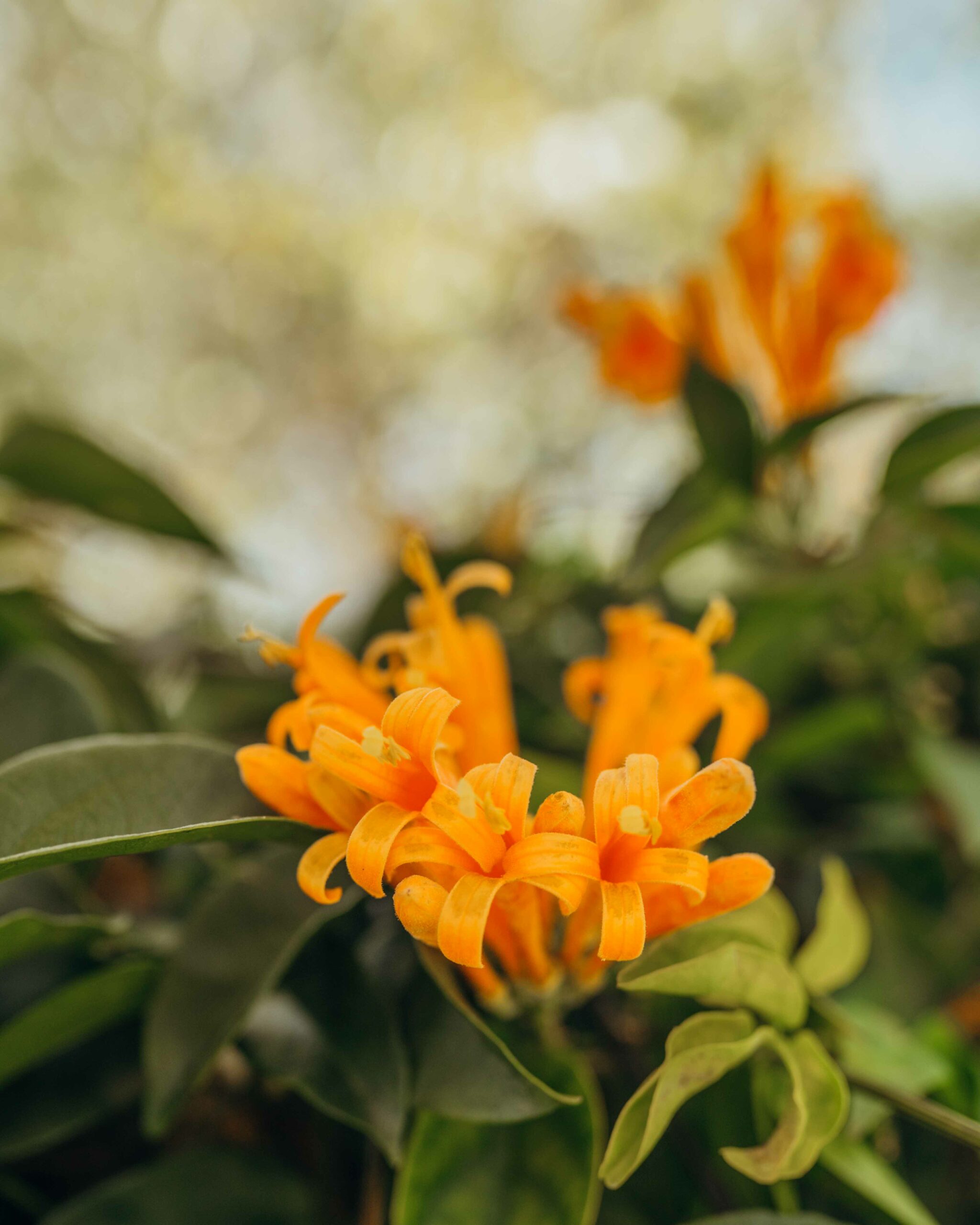
In ihrer Heimat blüht sie im südamerikanischen Sommer (Juli bis Oktober), während sie in Europa im Winterhalbjahr – also von Dezember bis Februar – zur Hochform aufläuft. Diese „umgekehrte“ Blütezeit macht sie besonders interessant für Wintergärten und subtropische Parks.
Der Name „Feuerranke“ bezieht sich auf die enorme Blütenfülle: ganze Mauern, Pergolen oder Zäune können wie in Flammen getaucht erscheinen. Ökologisch wichtig ist sie, weil ihre röhrenförmigen Blüten reich an Nektar sind und vor allem Kolibris und Schmetterlinge anlocken.
Schon im 19. Jahrhundert wurde sie von europäischen Pflanzensammlern eingeführt und hat sich als beliebte Zierpflanze in warmen Regionen rund um die Welt etabliert – besonders in Indien, Australien und im Mittelmeerraum.
Ein interessanter Fakt: Die Feuerranke ist nicht nur schön, sondern wird in Teilen Brasiliens auch traditionell genutzt – ihre Rinde enthält Stoffe, die in der Volksmedizin Anwendung fanden

Familie  

Trumpet flower family (Bignoniaceae)

The fire vine, botanically known as Pyrostegia venusta, belongs to the trumpet tree family (Bignoniaceae) and originates from Brazil, Argentina and Paraguay. It is a vigorous, evergreen climbing plant that can grow up to 15 metres high and covers large areas with its spectacular fire-red to orange-coloured, tubular flowers.
In its native habitat, it flowers during the South American summer (July to October), while in Europe it reaches its peak during the winter months – from December to February. This “reversed” flowering period makes it particularly interesting for winter gardens and subtropical parks.
The name ‘fire vine’ refers to its enormous abundance of flowers: entire walls, pergolas or fences can appear to be engulfed in flames. It is ecologically important because its tubular flowers are rich in nectar and attract hummingbirds and butterflies in particular.
It was introduced by European plant collectors as early as the 19th century and has established itself as a popular ornamental plant in warm regions around the world – especially in India, Australia and the Mediterranean.
An interesting fact: the fire vine is not only beautiful, but is also traditionally used in parts of Brazil – its bark contains substances that have been used in folk medicine.

Familia  

Bignoniáceas (Bignoniaceae)

Es una planta trepadora de crecimiento vigoroso y hoja perenne que puede alcanzar hasta 15 metros de altura y cubrir grandes superficies con sus espectaculares flores tubulares de color rojo fuego a naranja.
En su lugar de origen, florece durante el verano sudamericano (de julio a octubre), mientras que en Europa alcanza su máximo esplendor durante los meses de invierno, es decir, de diciembre a febrero. Este periodo de floración «inverso» la hace especialmente interesante para jardines de invierno y parques subtropicales.
El nombre «enredadera de fuego» hace referencia a la enorme abundancia de flores: paredes enteras, pérgolas o vallas pueden parecer envueltas en llamas. Es importante desde el punto de vista ecológico porque sus flores tubulares son ricas en néctar y atraen especialmente a colibríes y mariposas.
Ya en el siglo XIX fue introducida por coleccionistas de plantas europeos y se ha establecido como una planta ornamental popular en regiones cálidas de todo el mundo, especialmente en la India, Australia y el Mediterráneo.
Un dato interesante: la enredadera de fuego no solo es hermosa, sino que también se utiliza tradicionalmente en algunas partes de Brasil, ya que su corteza contiene sustancias que se utilizan en la medicina popular.