

Ficus benjamina

BIRKENFEIGE

Englische Bezeichnung: Benjamin Fig, Weeping Fig
Spanische Bezeichnung: Ficus Benjamina

Familie  

Maulbeergewächse (Moraceae)
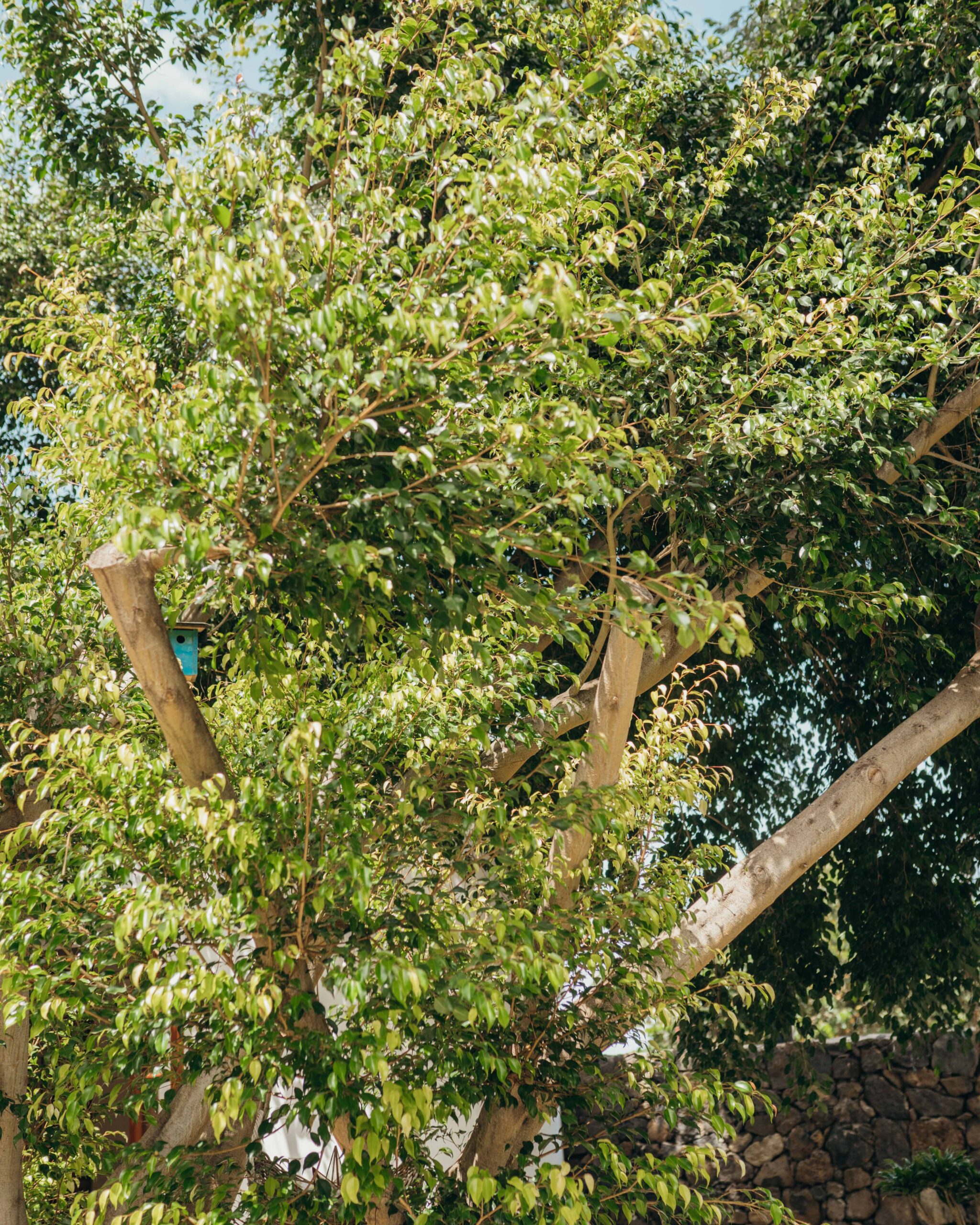
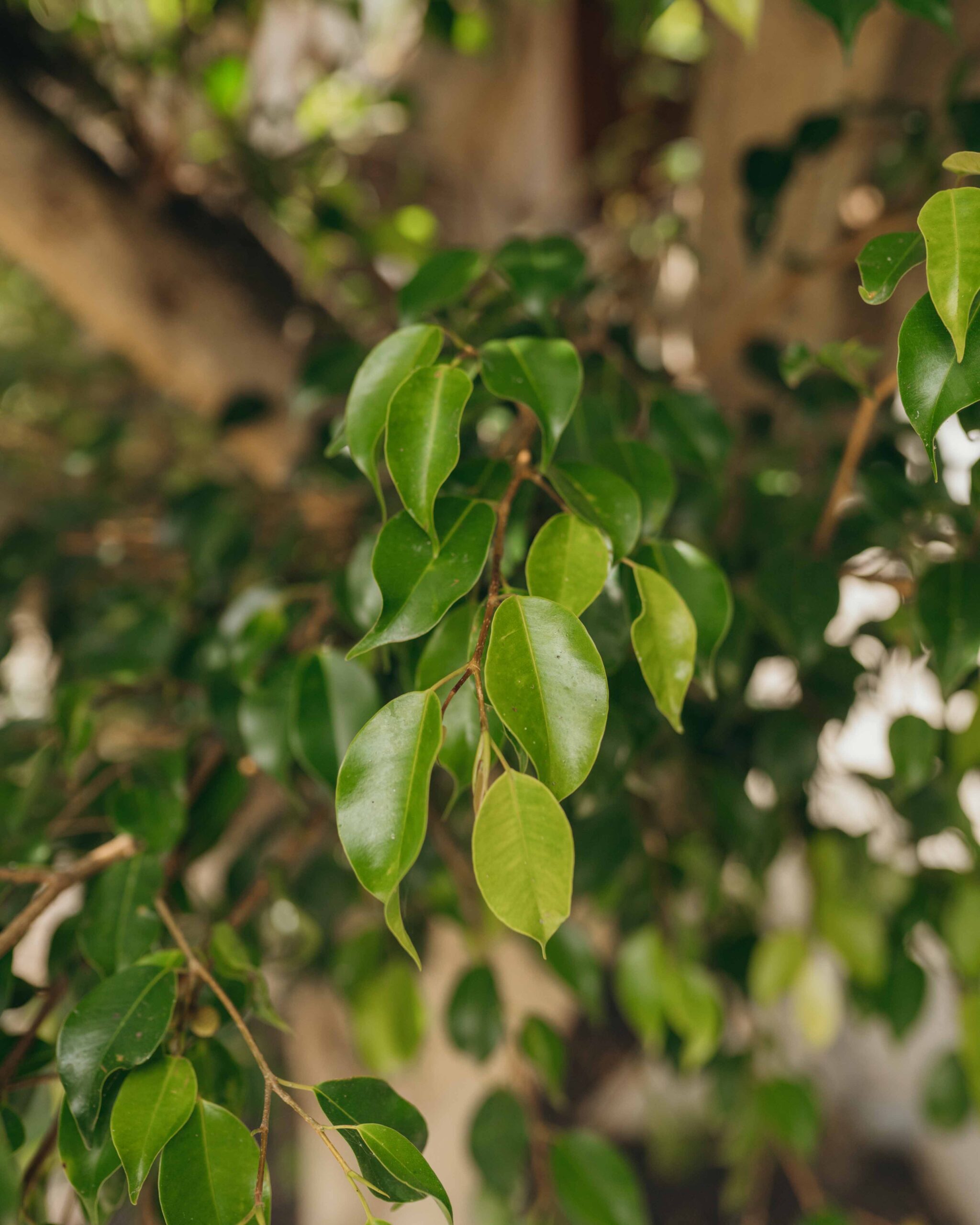
Die Ficus benjamina, auch Birkenfeige genannt, gehört zur Familie der Maulbeergewächse (Moraceae) und ist in Süd- und Südostasien sowie Nordaustralien beheimatet. In ihrer natürlichen Umgebung wächst sie zu einem bis zu 30 Meter hohen Baum mit weit ausladender Krone heran, während sie weltweit vor allem als beliebte Zimmer- und Büropflanze kultiviert wird. Typisch sind ihre schmalen, glänzenden, dunkelgrünen Blätter und die elegante, leicht überhängende Wuchsform.
Botanisch interessant ist, dass Ficus benjamina wie viele Feigenarten ein spezielles Bestäubungssystem mit Feigenwespen besitzt. In Innenräumen bildet sie jedoch keine Früchte, sondern wird rein dekorativ geschätzt. Sie reagiert empfindlich auf Standortwechsel und Zugluft, was sich oft im Abwerfen von Blättern zeigt – eine Anpassung an wechselnde Umweltbedingungen.
In der traditionellen Medizin einiger asiatischer Regionen wurden Rinde, Blätter und Latex gegen Entzündungen, Hautkrankheiten oder Verdauungsprobleme genutzt. Allerdings enthält der Milchsaft reizende Stoffe, die bei empfindlichen Personen Hautirritationen auslösen können.
Kulturell gilt die Birkenfeige in vielen Ländern als Symbol für Wohlstand, Harmonie und Beständigkeit. Sie wird in Asien teils auch als heiliger Baum verehrt. In der modernen Pflanzenkultur ist sie durch ihre Robustheit, Luftreinigungswirkung und ästhetische Erscheinung eine der weltweit meistverbreiteten Zimmerpflanzen.

Family 

Moraceae
Ficus benjamina, also known as weeping fig, belongs to the mulberry family (Moraceae) and is native to South and Southeast Asia and Northern Australia. In its natural environment, it grows into a tree up to 30 metres tall with a wide-spreading crown, while worldwide it is mainly cultivated as a popular house and office plant. It is characterised by its narrow, shiny, dark green leaves and elegant, slightly overhanging growth habit.
Botanically interesting is that, like many fig species, Ficus benjamina has a special pollination system involving fig wasps. However, it does not bear fruit indoors and is valued purely for its decorative qualities. It is sensitive to changes in location and draughts, which often manifests itself in the shedding of leaves – an adaptation to changing environmental conditions.
In traditional medicine in some Asian regions, the bark, leaves and latex were used to treat inflammation, skin diseases and digestive problems. However, the milky sap contains irritants that can cause skin irritation in sensitive individuals.
Culturally, the weeping fig is considered a symbol of prosperity, harmony and stability in many countries. In Asia, it is also revered as a sacred tree in some places. In modern plant culture, its robustness, air-purifying effect and aesthetic appearance make it one of the most widespread indoor plants worldwide.

Familia

Moraceae
El Ficus benjamina, también conocido como ficus benjamina, pertenece a la familia de las moráceas (Moraceae) y es originario del sur y sudeste asiático, así como del norte de Australia. En su entorno natural, crece hasta alcanzar una altura de 30 metros con una copa muy extensa, mientras que en todo el mundo se cultiva principalmente como planta de interior y de oficina. Son típicas sus hojas estrechas, brillantes y de color verde oscuro, así como su elegante forma de crecimiento ligeramente colgante.
Desde el punto de vista botánico, es interesante que, al igual que muchas especies de higueras, el Ficus benjamina posea un sistema especial de polinización con avispas del higo. Sin embargo, en interiores no da frutos, sino que se aprecia por su valor puramente decorativo. Es sensible a los cambios de ubicación y a las corrientes de aire, lo que a menudo se manifiesta en la caída de las hojas, una adaptación a las condiciones ambientales cambiantes.
En la medicina tradicional de algunas regiones asiáticas, la corteza, las hojas y el látex se utilizaban para tratar inflamaciones, enfermedades de la piel o problemas digestivos. Sin embargo, la savia contiene sustancias irritantes que pueden provocar irritaciones cutáneas en personas sensibles.
Culturalmente, el ficus benjamina se considera en muchos países un símbolo de prosperidad, armonía y estabilidad. En Asia, también se venera en parte como árbol sagrado. En la cultura vegetal moderna, es una de las plantas de interior más extendidas en todo el mundo por su robustez, su efecto purificador del aire y su aspecto estético.