Bixa Orellana

ANNATTOSTRAUCH

Englische Bezeichnung: Achiote
Spanische Bezeichnung: Achiote

Familie  

Annattogewächse (Bixaceae)
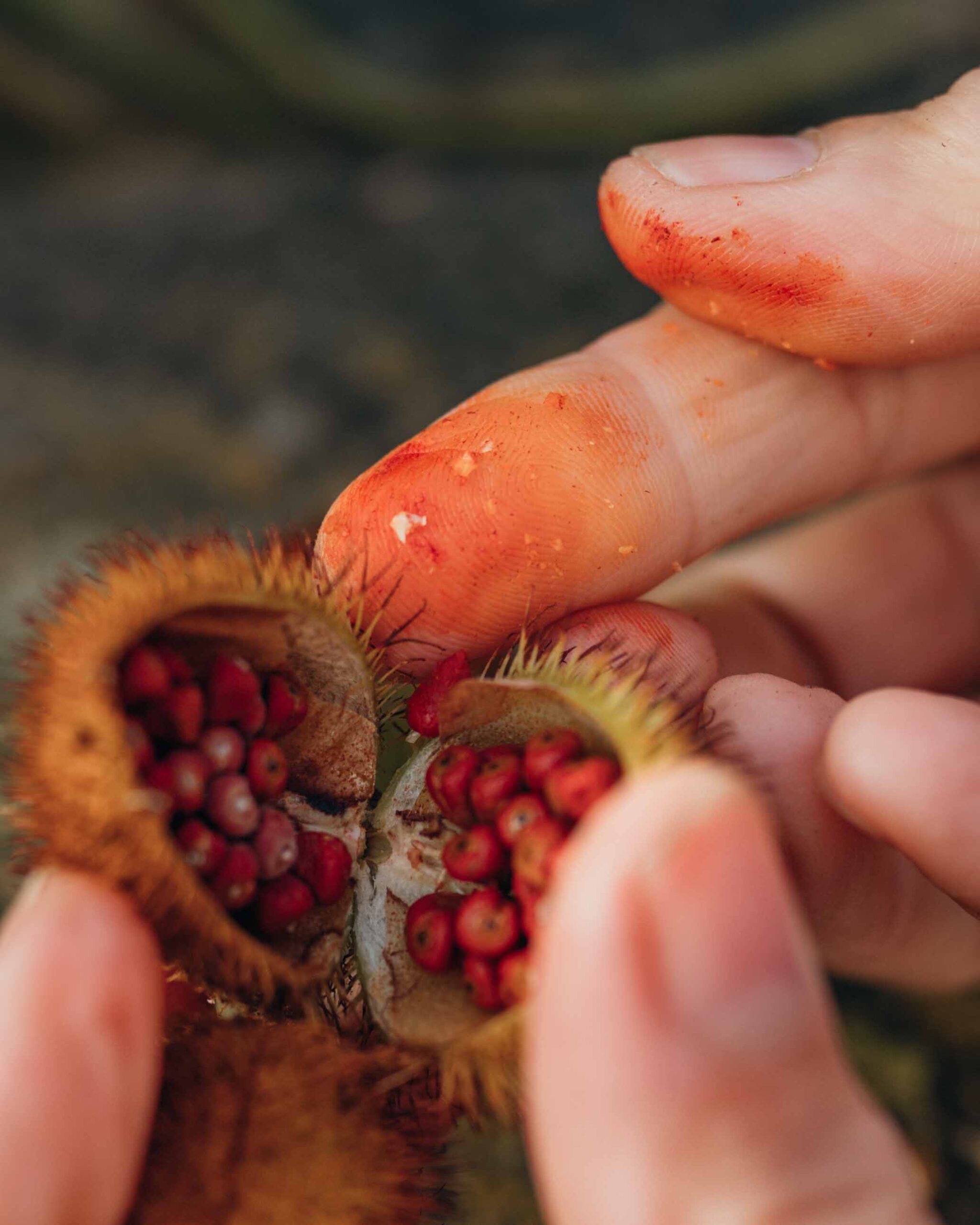
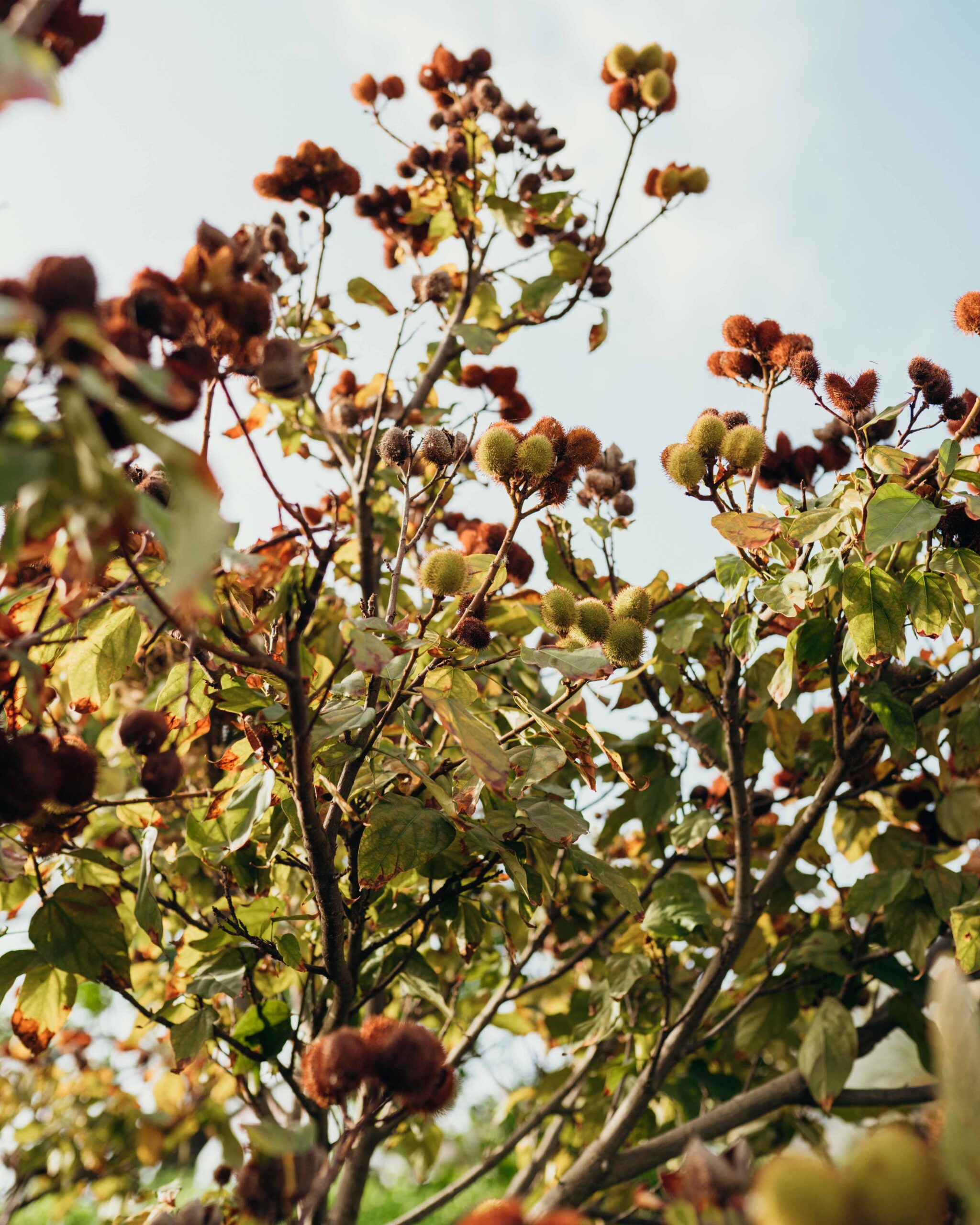
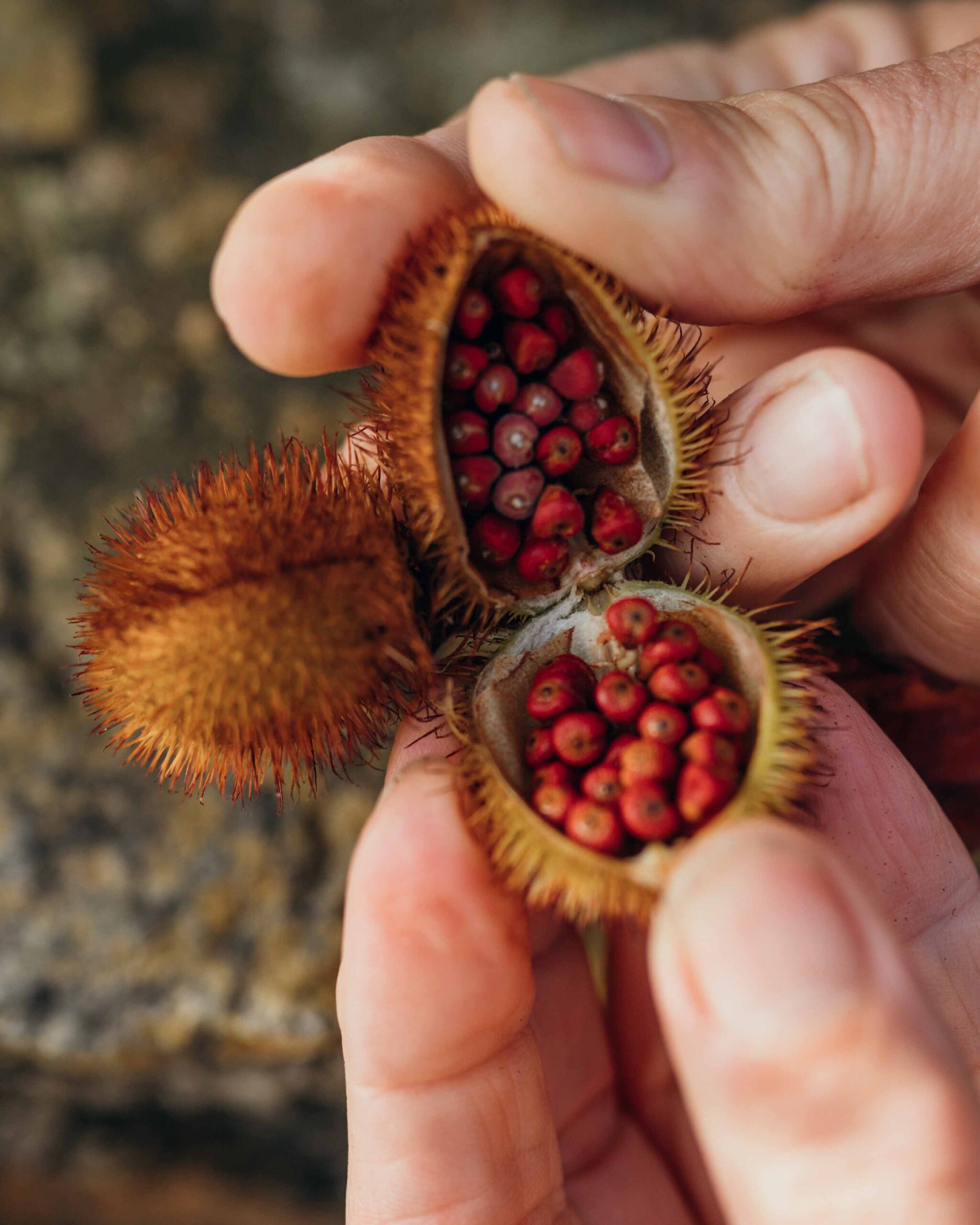
Die Bixa orellana, auch Annattostrauch oder Achiote genannt, ist ein immergrüner Strauch oder kleiner Baum aus der Familie der Bixaceae, der in tropischen Regionen Amerikas beheimatet ist. Er erreicht 3–6 Meter Höhe und trägt herzförmige Blätter sowie auffällige rosa bis weißliche Blüten. Besonders charakteristisch sind die stacheligen, roten Kapselfrüchte, die zahlreiche Samen enthalten, die von einer intensiv roten Wachsschicht umgeben sind.
Aus diesen Samen wird der natürliche Farbstoff Annatto gewonnen, der seit Jahrhunderten als Lebensmittelfarbe, für Kosmetika, Textilien und als rituelle Körperbemalung genutzt wird. Heute dient er weltweit als natürlicher Zusatzstoff (E160b), etwa für Käse, Butter oder Margarine.
In der traditionellen Medizin vieler indigener Völker Amerikas wird Bixa orellana gegen Hautkrankheiten, Verdauungsbeschwerden und Infektionen eingesetzt. Moderne Studien belegen antioxidative und antimikrobielle Eigenschaften des Farbstoffs.
Kulturell hatte die Pflanze große Bedeutung: Das „Roucou“ genannte Pulver wurde von indigenen Stämmen für Körperbemalung, Sonnenschutz und rituelle Zwecke verwendet. Symbolisch steht sie bis heute für Lebenskraft, Schutz und kulturelle Identität in vielen Teilen Lateinamerikas.
Heute wird Bixa orellana in zahlreichen tropischen Regionen kultiviert und vereint praktische Nutzung, medizinische Bedeutung und kulturelles Erbe.


Family

Bixaceae
Bixa orellana, also known as annatto or achiote, is an evergreen shrub or small tree from the Bixaceae family, native to tropical regions of America. It grows to a height of 3–6 metres and has heart-shaped leaves and striking pink to whitish flowers. Particularly characteristic are the spiny, red capsule fruits, which contain numerous seeds surrounded by an intense red wax layer.
These seeds are used to extract the natural dye annatto, which has been used for centuries as a food colouring, in cosmetics, textiles and for ritual body painting. Today, it is used worldwide as a natural additive (E160b) in products such as cheese, butter and margarine.
In the traditional medicine of many indigenous peoples of the Americas, Bixa orellana is used to treat skin diseases, digestive problems and infections. Modern studies have confirmed the antioxidant and antimicrobial properties of the dye.
The plant was also of great cultural significance: the powder, known as ‘roucou’, was used by indigenous tribes for body painting, sun protection and ritual purposes. To this day, it symbolises vitality, protection and cultural identity in many parts of Latin America.
Today, Bixa orellana is cultivated in numerous tropical regions and combines practical use, medicinal significance and cultural heritage.
Familia

Bixaceae
La Bixa orellana, también conocida como arbusto de annatto o achiote, es un arbusto o árbol pequeño de hoja perenne de la familia Bixaceae, originario de las regiones tropicales de América. Alcanza una altura de entre 3 y 6 metros y tiene hojas en forma de corazón y llamativas flores de color rosa a blanquecino. Son especialmente característicos sus frutos espinosos y rojos, que contienen numerosas semillas recubiertas de una capa cerosa de color rojo intenso.
De estas semillas se obtiene el colorante natural achiote, que se utiliza desde hace siglos como colorante alimentario, en cosméticos, textiles y como pintura corporal ritual. Hoy en día se utiliza en todo el mundo como aditivo natural (E160b), por ejemplo, en quesos, mantequilla o margarina.
En la medicina tradicional de muchos pueblos indígenas de América, la Bixa orellana se utiliza para tratar enfermedades de la piel, trastornos digestivos e infecciones. Estudios modernos demuestran las propiedades antioxidantes y antimicrobianas del colorante.
Culturalmente, la planta tenía una gran importancia: el polvo llamado «roucou» era utilizado por las tribus indígenas para pintarse el cuerpo, protegerse del sol y con fines rituales. Simbólicamente, sigue representando hoy en día la vitalidad, la protección y la identidad cultural en muchas partes de América Latina.
Hoy en día, la Bixa orellana se cultiva en numerosas regiones tropicales y combina el uso práctico, la importancia médica y el patrimonio cultural.