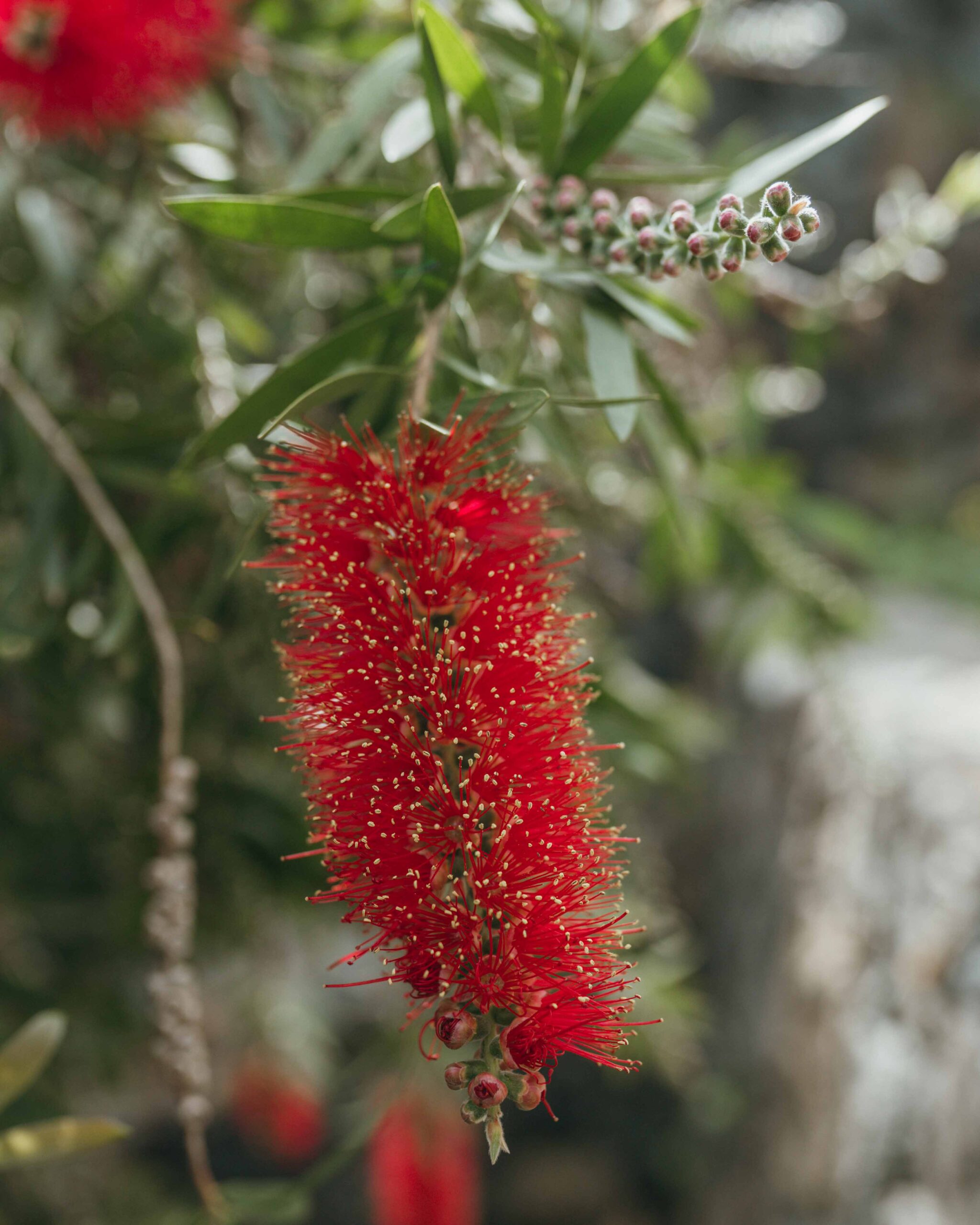
Callistemon citrinus

KARMINROTE ZYLINDERPUTZER

Englische Bezeichnung: Callistemon
Spanische Bezeichnung: Arbol del Cepillo, Escobillón

Familie  

Myrtengewächse (Myrtaceae)
Die Callistemon citrinus, auch Zylinderputzer oder Bottlebrush genannt, gehört zur Familie der Myrtengewächse (Myrtaceae) und stammt aus Australien. Der immergrüne Strauch oder kleine Baum erreicht meist 2–5 Meter Höhe und ist durch seine charakteristischen, zylinderförmigen, roten Blütenstände bekannt, die an Flaschenbürsten erinnern. Diese bestehen aus zahlreichen langen Staubblättern, die Insekten, Vögel und vor allem Nektarvögel anlocken. Die Blütezeit ist lang und wiederholt sich oft mehrmals im Jahr.
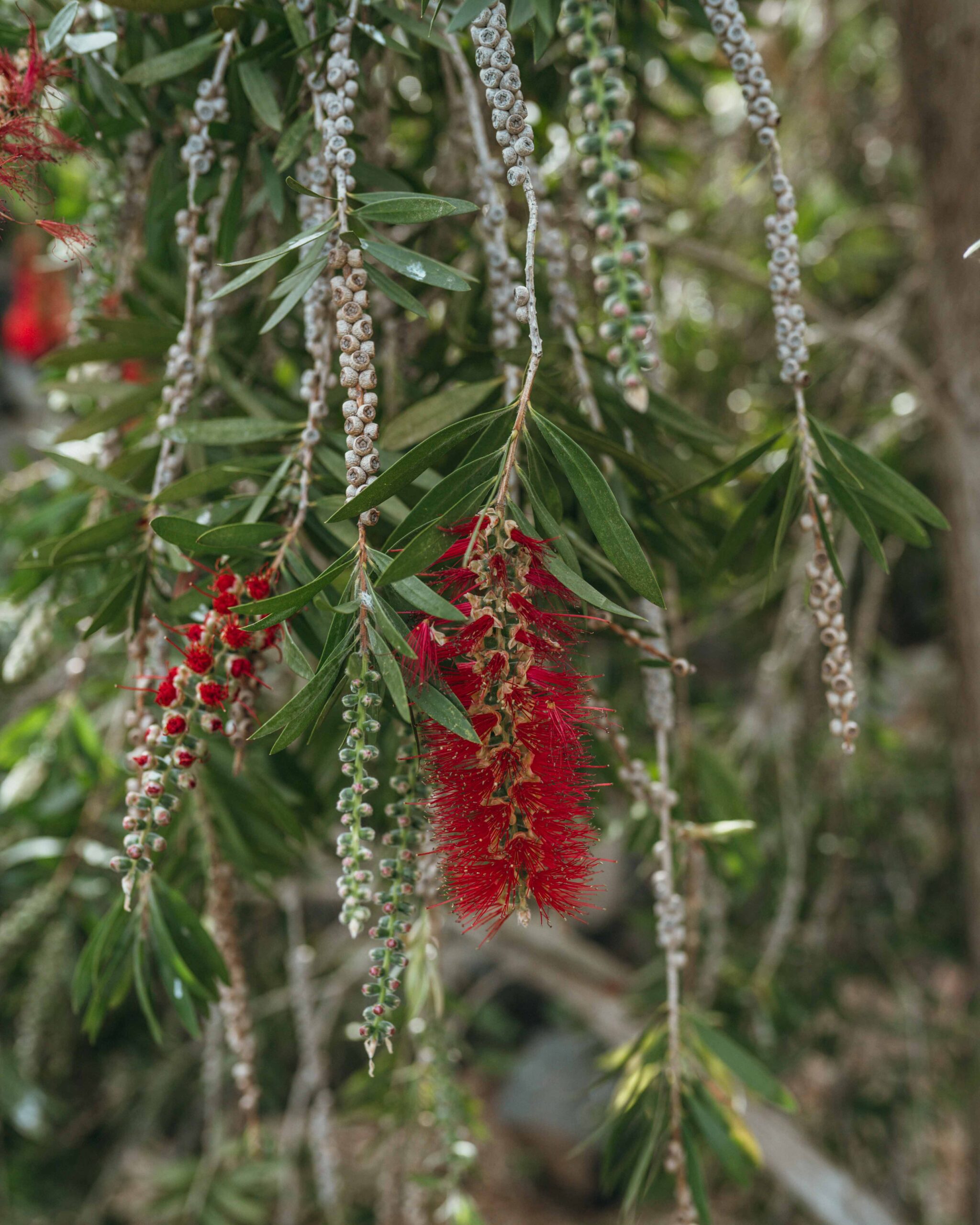
Die schmalen, ledrigen Blätter verströmen beim Zerreiben einen zitronenähnlichen Duft – daher der Artname „citrinus“. Nach der Blüte bilden sich holzige Kapselfrüchte, die oft jahrelang am Zweig haften bleiben. Botanisch interessant ist die hohe Anpassungsfähigkeit: Callistemon citrinus verträgt Sonne, Hitze, kurze Trockenheit und auch Rückschnitt, weshalb er in vielen Ländern als pflegeleichte Zierpflanze in Parks und Gärten kultiviert wird.
In der traditionellen australischen Heilkunst wurden Aufgüsse aus den Blättern gegen Erkältungen und Infektionen eingesetzt. Heute ist die Pflanze weltweit verbreitet und wegen ihrer auffälligen Blüten ein beliebtes Gestaltungselement. Symbolisch steht der Zylinderputzer oft für Reinheit und Vitalität, in Australien gilt er zudem als Sinnbild der heimischen Flora.

Family

Myrtle (Myrtaceae)
Callistemon citrinus, also known as bottlebrush, belongs to the myrtle family (Myrtaceae) and originates from Australia. The evergreen shrub or small tree usually reaches a height of 2–5 metres and is known for its characteristic cylindrical red inflorescences, which resemble bottle brushes. These consist of numerous long stamens that attract insects, birds and, above all, nectar-feeding birds. The flowering period is long and often repeats several times a year.
The narrow, leathery leaves exude a lemon-like scent when crushed – hence the species name “citrinus”. After flowering, woody capsule fruits form, which often remain attached to the branch for years. Its high adaptability is botanically interesting: Callistemon citrinus tolerates sun, heat, short periods of drought and even pruning, which is why it is cultivated in many countries as an easy-care ornamental plant in parks and gardens.
In traditional Australian medicine, infusions made from the leaves were used to treat colds and infections. Today, the plant is widespread worldwide and is a popular design element due to its striking flowers. Symbolically, the bottlebrush often stands for purity and vitality, and in Australia it is also considered a symbol of the native flora.

Familia

Familia del Mirto (Myrtaceae)
El Callistemon citrinus, también conocido como «cepillo de botellas» o «cepillo cilíndrico», pertenece a la familia de las mirtáceas (Myrtaceae) y es originario de Australia. Este arbusto o árbol pequeño de hoja perenne suele alcanzar una altura de entre 2 y 5 metros y es conocido por sus características inflorescencias cilíndricas de color rojo, que recuerdan a los cepillos para botellas. Estas están formadas por numerosos estambres largos que atraen a insectos, pájaros y, sobre todo, pájaros nectarívoros. El periodo de floración es largo y se repite varias veces al año.
Las hojas estrechas y coriáceas desprenden un aroma similar al del limón cuando se frotan, de ahí el nombre de la especie «citrinus». Después de la floración, se forman frutos cápsulas leñosos que a menudo permanecen adheridos a la rama durante años. Desde el punto de vista botánico, es interesante su gran capacidad de adaptación: Callistemon citrinus tolera el sol, el calor, la sequía breve y también la poda, por lo que se cultiva en muchos países como planta ornamental de fácil cuidado en parques y jardines.
En la medicina tradicional australiana, las infusiones de sus hojas se utilizaban para combatir resfriados e infecciones. Hoy en día, la planta se ha extendido por todo el mundo y es un elemento decorativo muy popular debido a sus llamativas flores. Simbólicamente, el limpiador de cilindros suele representar la pureza y la vitalidad, y en Australia también se considera un símbolo de la flora autóctona.