Kanaren-Kantensame
Asteraceae (Korbblütler)

Kanarisches Gonospermum

Englische Bezeichnung: Gonospermum canariense
Spanische Bezeichnung: Faro herreño / Faro palmero

Familie  

Korbblütler (Asteraceae)

Gonospermum canariense ist eine endemische Pflanze der Kanarischen Inseln und gehört zur Familie der Korbblütler (Asteraceae). Sie wächst vor allem in den feuchteren, laurisilva-nahen Zonen Teneriffas und Gran Canarias. Es handelt sich um einen mehrjährigen, buschigen Halbstrauch, der bis etwa 1,5 m hoch werden kann.
Die Pflanze zeichnet sich durch ihre hellgrünen, tief eingeschnittenen Blätter und die auffälligen weißen, margeritenähnlichen Blüten aus, die in lockeren Doldenständen erscheinen. Sie blüht vor allem im Frühjahr und trägt damit wesentlich zur bunten Blütenvielfalt der kanarischen Landschaft bei.
Historisch interessant: Das Genus Gonospermum wurde im 19. Jahrhundert beschrieben, um eine Gruppe kanarischer Arten von den nah verwandten Gattungen Chrysanthemum und Tanacetum abzugrenzen. Heute sind etwa sieben Arten bekannt, alle endemisch auf den Kanaren.
Ökologisch spielt G. canariense eine wichtige Rolle als Nektarquelle für Insekten, darunter endemische Wildbienen und Schmetterlinge. Wegen seiner Seltenheit und begrenzten Verbreitung gilt die Art als schützenswert.
In der Gartenkultur wird sie wegen ihres attraktiven Erscheinungsbildes gelegentlich als Zierpflanze genutzt, ist jedoch außerhalb der Kanaren noch relativ unbekannt.
 

Family

Compositae (Asteraceae)

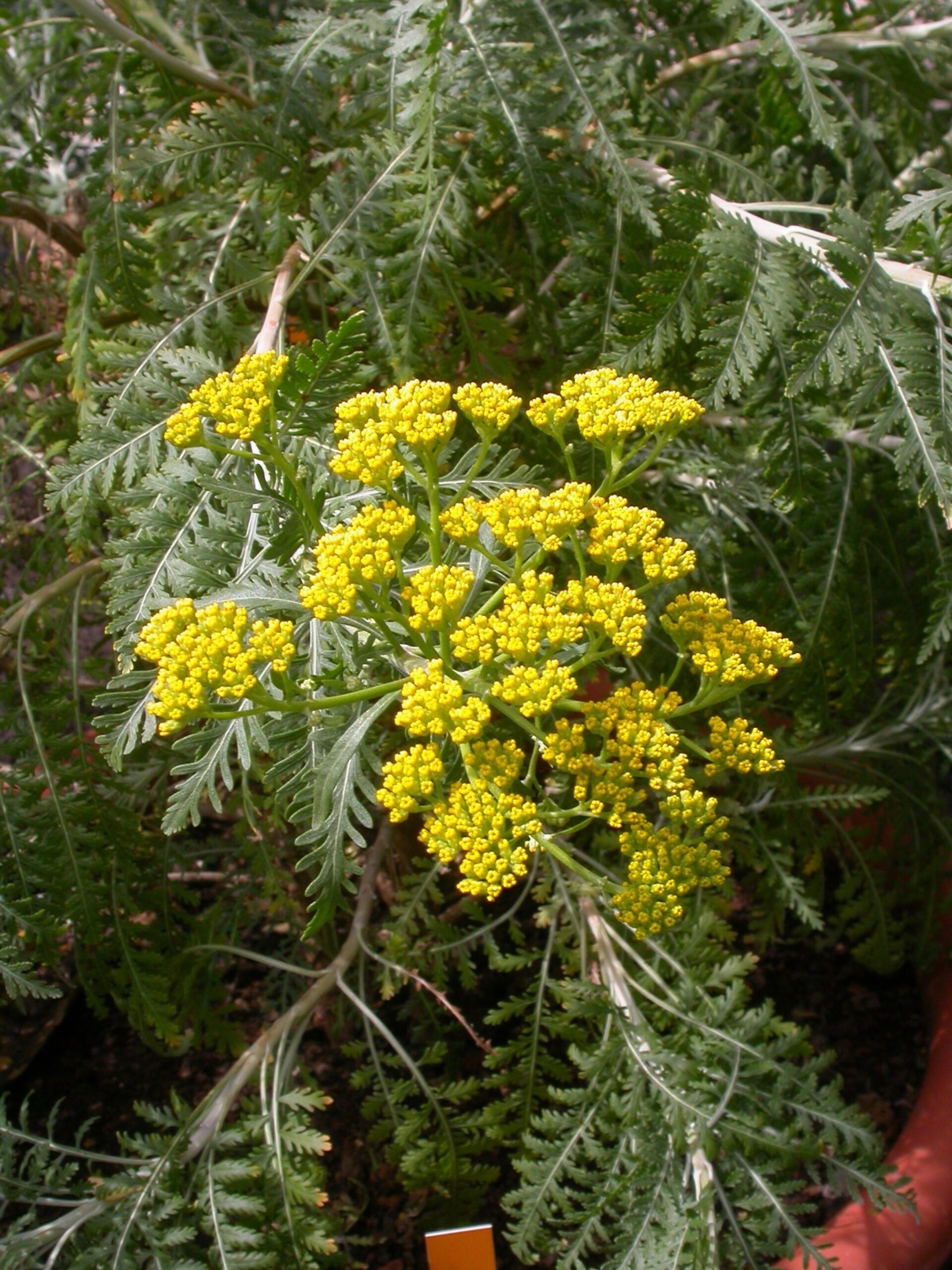
Gonospermum canariense is a plant endemic to the Canary Islands and belongs to the Asteraceae family. It grows mainly in the more humid areas of Tenerife and Gran Canaria, close to the laurel forests. It is a perennial, bushy subshrub that can grow to a height of around 1.5 metres.
The plant is characterised by its light green, deeply cut leaves and striking white, daisy-like flowers that appear in loose umbels. It flowers mainly in spring and thus contributes significantly to the colourful variety of flowers in the Canary Islands landscape.
Historically interesting: The genus Gonospermum was described in the 19th century to distinguish a group of Canarian species from the closely related genera Chrysanthemum and Tanacetum. Today, about seven species are known, all endemic to the Canary Islands.
Ecologically, G. canariense plays an important role as a source of nectar for insects, including endemic wild bees and butterflies. Due to its rarity and limited distribution, the species is considered worthy of protection.
In horticulture, it is occasionally used as an ornamental plant because of its attractive appearance, but it is still relatively unknown outside the Canary Islands.

Familia

Compus (Asteraceae)

Gonospermum canariense es una planta endémica de las Islas Canarias y pertenece a la familia de las asteráceas (Asteraceae). Crece principalmente en las zonas más húmedas y cercanas a la laurisilva de Tenerife y Gran Canaria. Se trata de un arbusto perenne y tupido que puede alcanzar una altura de hasta 1,5 m.
La planta se caracteriza por sus hojas de color verde claro y profundamente recortadas y por sus llamativas flores blancas, similares a las margaritas, que aparecen en racimos sueltos. Florece principalmente en primavera, contribuyendo así de manera significativa a la colorida variedad floral del paisaje canario.
Dato histórico interesante: el género Gonospermum fue descrito en el siglo XIX para diferenciar un grupo de especies canarias de los géneros Chrysanthemum y Tanacetum, con los que está estrechamente emparentado. Hoy en día se conocen unas siete especies, todas ellas endémicas de las Islas Canarias.
Desde el punto de vista ecológico, G. canariense desempeña un papel importante como fuente de néctar para los insectos, entre ellos las abejas silvestres y las mariposas endémicas. Debido a su rareza y distribución limitada, la especie se considera digna de protección.
En la jardinería se utiliza ocasionalmente como planta ornamental por su atractivo aspecto, pero fuera de las Islas Canarias es todavía relativamente desconocida.